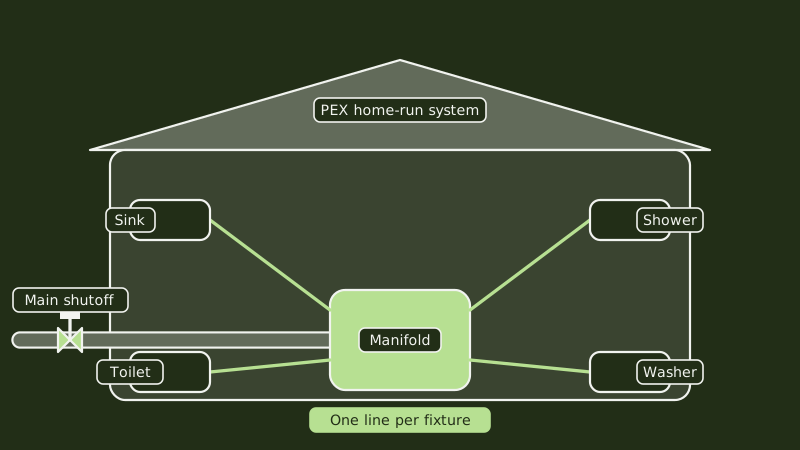
A published Southern California cost guide that covers Orange County puts whole-house repipes at $4,500 to $18,000, with PEX at the low end and copper higher. Larger homes with more bathrooms sit toward the top of that span. None of that is a quote. This page shows the breakdown, then points to the repipe guide that explains the work itself.
What does a whole house repipe cost by number of bathrooms?
Bathroom count is the quickest estimator, because it tracks fixtures and pipe length. One bath means a short run, while three or four baths mean many more drops, fittings and wall openings. Copper costs more than PEX at every size, since the material and the labor both climb. The one published regional range is in the opening paragraph.
Every house is different, so use the range to start a conversation, not end one. Have each plumber itemize the quote on paper and say how many fixtures it assumes. A three-bedroom, two-bath home has a dozen or more.
What does repiping a two-thousand-square-foot house run?
A house that size usually has two to three bathrooms. Published guides do not agree on one figure for a home that size, and the gap comes down to access and fixture count. Copper costs noticeably more than PEX in the same house, and the written quote sets the price.
The square footage itself is a weak driver, and no dependable per-square-foot price turned up, so fixture count is the better yardstick. A compact home with bathrooms stacked back to back costs less than a sprawling single-story with fixtures at every corner, because the plumber buys and runs less pipe. Ask how many fixtures the quote assumes, and whether it counts hose bibs, the water heater, ice maker and washer box.
What about a smaller fifteen-hundred-square-foot house?
Homes of 1,500 square feet are often one or two bathroom bungalows, which usually means fewer fixtures to pipe than a larger house. Plenty of Santa Ana houses built between the twenties and fifties are this size, and they are the ones likeliest to have galvanized steel in the walls. A smaller floor plan does not promise a smaller bill.
Older homes can raise the price through hidden conditions: plaster walls instead of drywall, narrow framing, original cast iron drains that must be tied into, and a water heater closet that needs updating to current code. The article on replacing plumbing in an old house lists those surprises.
How much more does it cost if the house is on a slab?
Published guides do not give a reliable slab surcharge, so I will not invent one. What changes is the route: with no crawlspace, the plumber runs new lines through walls and the attic instead of under the floor, or locates the leak and repairs it. Get both options priced separately, and read the comparison in slab leak repair or repipe.
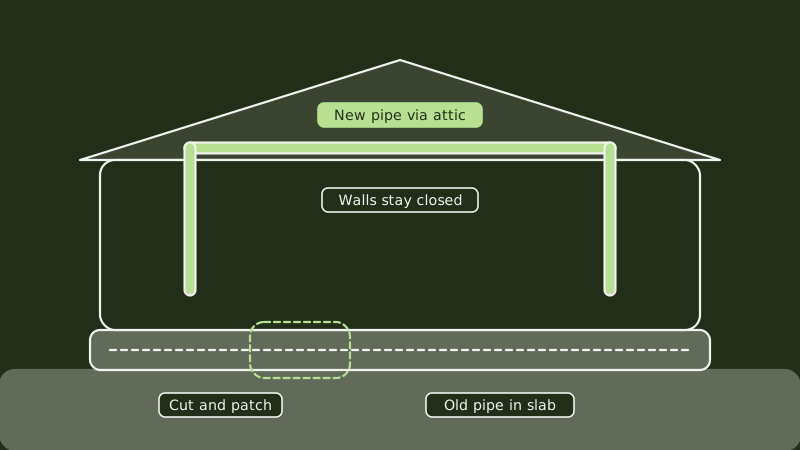
Routing through the attic is common in Southern California because attics are accessible and the walls need only small holes. The slab itself is left alone unless the plumber is repairing a leak beneath it. When the trouble is a single leak instead of tired pipe throughout, a spot repair is cheaper, and a pinhole in copper is described in the pinhole leak repair guide.
What is the cheapest sensible way to repipe?
PEX is the lowest-cost full repipe: the tubing bends, goes in fast and costs little, and because labor dominates, speed saves real money. A partial repipe, replacing only the worst section such as a bathroom branch or the lines to the water heater, costs less still. Cutting out drywall repair or doing the patching yourself saves more.
Three honest cautions. A partial repipe leaves old pipe in place, so test pressure and check what remains. Ask whether the quote includes drywall patching and paint; guides treat them as usually extra. And choose a PEX fitting system you can service, which PEX versus copper and the PEX A or B guide discuss. Santa Ana tap water is hard, about 15 grains per gallon by the City, and it scales copper and fittings over decades.
How much does a polybutylene or small-job repipe cost?
If your house still has gray polybutylene pipe, the repipe is the cure and the price follows the tables above. A bathroom-only repipe or a few fixtures costs a fraction of a whole house, though per-fixture pricing is higher on small jobs. Our guides on polybutylene replacement and its costs explain.
Which parts of the bill are labor, materials and permits?
Labor is the largest piece; Angi puts it near seventy percent. Copper tubing and fittings cost more than PEX per foot, and the quote should list materials. Permits and inspections add a line, and drywall repair is usually extra. A plumbing permit is part of the job; ask the plumber to confirm who pulls it.
How inspections work is in how to pull a plumbing permit, and the city's Building and Safety division is the office to contact. A plumber with the right contractor license can pull the permit, and the CSLB lookup shows whether the plumbing classification is active.
Common questions
What signs say the pipes are finished?
There is no fixed schedule. Watch for rusty or discolored water, falling pressure, repeated pinhole leaks, green stains at joints or flaking on galvanized pipe. Age alone is a poor guide, since lifespans depend on the metal, the water and the installation. A plumber can inspect, pressure test and tell you what is left.
Is repiping a difficult job?
It is a major plumbing job, nothing like a weekend project. Work commonly takes a few days, the water is shut for stretches, and walls and ceilings get opened in places. Almost no one does it themselves, and it should not be a DIY project because of permits and the risk of hidden leaks.
Can a house be repiped without tearing out walls?
Mostly, yes. PEX is flexible enough to fish through walls and attics with small access holes, and the holes get patched afterward. Plaster walls and tight framing make it harder. Ask the plumber where openings will be, how many, and whether patching and painting are in the price.
Does repiping add value?
It removes a known worry for a buyer or an insurer, especially with polybutylene or galvanized pipe, but no reliable resale figure for this area turned up. Think of it as protecting the house, not as an upgrade. Keep the permit record and invoice; they answer the inspector's question.
What drags down a home's value the most?
Hidden major defects tend to hurt most: foundation and structural trouble, roof failure, water intrusion and failing systems. Plumbing alone rarely heads that list, though ignored leaks breed mold and rot. No source I found ranks the causes, so ask a local real estate professional.
What do plumbers actually charge for a whole-house repipe?
The one regional guide I found gives $4,500 to $18,000 for the Southern California region, with PEX at the low end and copper higher. Collect two written quotes, look up each plumber's record on the contractor board's site, and insist that scope, materials, patching and permits are itemized.
Budget sorted? plumber in Santa Ana explains the rest of the job.
Sources
Last updated