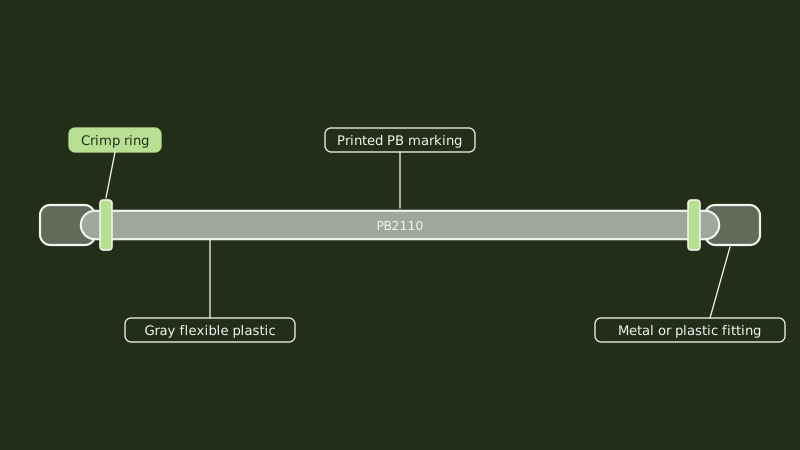
Polybutylene, often called Poly-B, is a flexible plastic water pipe used in North American homes from around 1978 until the mid to late 1990s. Chlorine and chloramine in public water can break the material down from the inside, so it leaks or splits with little warning. If you find it in your house, the standard remedy is repiping with PEX or copper. Our page on repiping a house with PEX covers that work in general.
Plenty of Southern California houses were built or remodeled in the years polybutylene was installed, so it can turn up in Santa Ana homes from that period. Bungalows put up between the 1920s and the 1950s were plumbed with other materials, typically galvanized steel or copper, although a remodel during the polybutylene era may have slipped a section in.
How can I recognize polybutylene in my walls and crawl space?
Look for flexible plastic supply pipe in gray, and sometimes blue or black, usually about the width of a finger. Inspect any exposed pipe: around the water heater, at the main shutoff, beneath sinks, in the garage and under the house. Many lengths are stamped with the code PB2110. The pipe joins to fittings with crimped rings, in plastic or metal.
Polybutylene has no glue joints like PVC, and it bends in long curves without elbows, which is part of why it was popular. Copper looks metallic, PEX is usually red, blue or white and is stamped PEX, and CPVC is cream or light yellow. If you cannot tell, take a clear photo and ask a plumber.
Your home's age is a clue. A house built or substantially plumbed between about 1978 and the mid-1990s is a candidate. A permit record at the city's Building and Safety office, or a home inspection report, may name the pipe material. Not every house from those years has it, so check rather than assume.
Why is polybutylene replaced, and does it fail on its own?
The chlorine and chloramine used to disinfect public water slowly attack the pipe and its acetal fittings, and the damage is worst at fittings, bends and kinks. The pipe can look fine outside while it weakens inside, and it may leak slowly or burst suddenly. Wikipedia describes this degradation and notes that it is hard to detect.
That is why replacement is the usual advice instead of waiting for a failure. A split behind drywall or over a ceiling can empty a lot of water into the house fast, and the cleanup often costs more than the pipe. Our page on ceiling damage from a water leak shows what the aftermath looks like.
Not every polybutylene house leaks, and some have run for decades. But there is no test that tells you which pipes are safe, and fittings fail without visible signs. Many owners choose to replace the pipe before a leak, especially when selling, since buyers and insurers ask about it.
Is there a class action or replacement program I can still use?
A major class action, Cox v. Shell Oil, settled for about $1 billion according to Wikipedia, though other sources give a lower figure. Deadlines to file claims under that settlement have passed, so most owners today pay for replacement themselves. Check any offer carefully, and be cautious of anyone claiming a program will pay for your repipe.
We cannot verify current claims programs from here. Our related page on the polybutylene replacement program explains what is known. If you read about an offer, confirm it with the organization named in the official settlement documents, not with a phone caller.
If your insurer has asked about polybutylene, call them and ask what they require. Some insurers raise questions or conditions for homes with this pipe, and policies differ.
What will a polybutylene repipe cost?
National 2026 cost guides put whole-house repiping at roughly $2,000 to $15,000, with home size, bathroom count, pipe choice and the amount of wall and ceiling that must be opened all pulling the number around. Copper costs more than PEX. A small house with open access sits at the low end.
What moves the price:
| Factor | Effect |
|---|---|
| Home size and number of bathrooms | More pipe and fixtures, more labor |
| Pipe material | Copper costs more than PEX |
| Access | Slab homes and finished walls cost more than open crawl spaces |
| Drywall and paint | Often billed separately, so ask what is included |
| Permit | Repiping generally needs one |
Each quote should itemise what is in the price: pipe, fittings, shutoff valves, fixture hookups, permit, haul-away and patching. Ask whether drywall repair is part of the price or left to you. Two companion pages go deeper: repiping prices and polybutylene replacement costs. Treat all of this as a guide. The number to rely on is the one in the quote written after a site visit.
Should I replace with PEX or copper?
Both work, and both are used across Southern California. PEX is flexible, goes in faster with fewer joints, and is usually cheaper. Copper is rigid, long-lived and common in Santa Ana's older homes. Water chemistry matters too: the City's supply is very hard, around 15 grains per gallon, which affects heaters and fixtures more than either pipe.
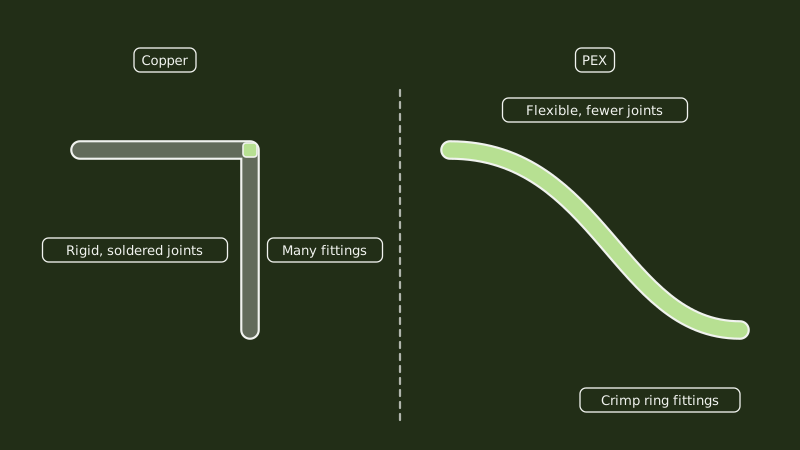
Our guides on PEX versus copper and PEX grades compare them in detail. Ask the contractor which fittings and pipe brands go in, and get any warranty on parts and labor in writing.
Whichever pipe you choose, the job should include new shutoff valves at fixtures, and the plumber should pressure test the new lines before walls are closed. Replacement should cover the whole system, since leaving a polybutylene section behind leaves a failure point.
Which permit and which contractor does a repipe call for?
A repipe normally calls for a plumbing permit, and in Santa Ana those come from the Building Safety Division at the Permits Counter. Hire a plumber with a California contractor license for it, and have that person apply for the permit and have the inspection done before walls close. The quote should say who is responsible.
CSLB tells homeowners to verify the license number online, gather several written bids for the same scope, and distrust a price far under the rest. A deposit should not exceed one tenth of the job price, or $1,000 if that is lower. A repipe sits far above the $1,000 point at which a California contractor license is required.
Selling soon? Ask your agent which paperwork buyers expect. An invoice and a signed-off permit prove the work was done and inspected. To talk about your own house, describe the pipe you found in a note on the quote page.
Common questions
How many days does a polybutylene repipe usually run?
A typical house takes from a couple of days to about a week, depending on size, access and how much drywall is opened. Many crews restore water at the end of each working day, so ask how yours will handle it. A small home with open access goes faster, and a two-story house with finished walls takes longer.
What should I settle before signing with a repiping contractor?
Begin by verifying the contractor's license number with the state. Then pin down the pipe material, who applies for the permit, whether drywall repair and painting come with the price, how water service will be handled day to day, and which warranty applies. Compare at least two written bids covering the same scope.
Do I have to stay around the house while the pipes are replaced?
Someone should be home or available most days to give access and approve decisions. The plumber needs to reach every fixture, so clear cabinets under sinks and the areas around walls where pipe will run. Plan for no water at times, and move valuables away from walls being opened.
Will my insurance cover polybutylene replacement?
Usually not by itself. Homeowner policies often pay for sudden water damage, and exclude wear and tear, so replacing pipe before it fails is generally your cost. Some insurers raise questions about this pipe. Ask your insurer what they need and whether replacing it changes your policy.
For the wider picture, start with plumber in Santa Ana.
Sources
Last updated