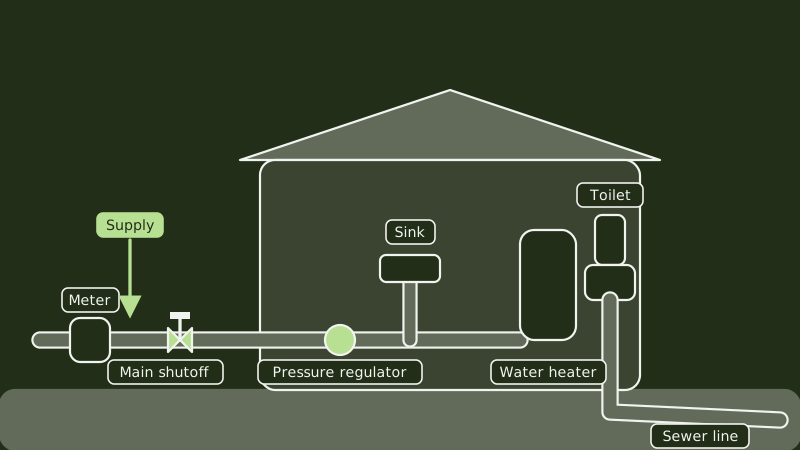
Plumbing trouble in Santa Ana usually starts small: a drip under the vanity, a drain that gurgles, a shower that never warms up. Phone us, describe it, and a local plumber visits to find the cause and hands you a price on paper before touching a wrench. This page explains how those visits go, what the price depends on, and how to prepare. The home page lists every job we arrange.
Why does the first visit cost money?
Published price guides show plumbers billing a diagnostic or trip charge, and the amount varies by business. Plenty of them deduct it when you approve the repair. What you buy is someone finding the cause, which is the hard part. Raise the question of that charge, and any credit, while booking.
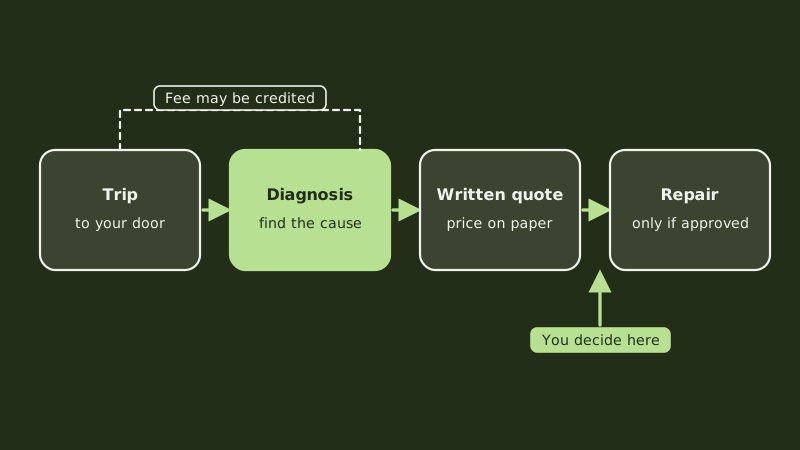
Diagnosis earns its fee in a Santa Ana house because the plumbing underneath is often a patchwork. A 1940s bungalow near Floral Park can hold galvanized steel from the original build, copper from a 1980s remodel and a clay or iron sewer line nobody has opened since Truman. A stain on the ceiling might be any of those, or the roof. Telling them apart takes a look, a pressure gauge and sometimes a camera.
Which plumbing problems come up most in Santa Ana?
Blocked drains, toilets that will not stop running, leaking faucets and failing water heaters account for the bulk of calls. Hard water makes several worse: the City reports roughly 15 grains per gallon, and that scale builds up inside heaters, aerators and shower heads over the years.
A rough sorting by how often people ring:
- Kitchen and tub drains that clog, priced in our drain cost guide.
- Toilet trouble, handled on the toilet repair page.
- Tank heaters leaking or running cold, see water heater replacement cost.
- Weak pressure and pinholes in tired copper or galvanized lines.
- Burst or weeping supply lines, which go on the emergency plumber list.
What kinds of plumbing work can you send someone for?
Residential plumbing falls into water supply, drain-waste-vent piping and gas piping, and the services sit on top of those three. Gas is the strictest. Water heaters, repipes, disposals, softeners and pressure regulators each have their own parts, permits and price drivers, so the quote lists them separately.
The service menu in plain terms:
- Fix-it work: faucets, toilets, angle stops, hose bibs, disposals.
- Drains: snaking, a camera run down the line, and high-pressure jetting.
- Hot water: tank repairs, replacements, and tankless installation.
- Pipe replacement: see repiping prices.
- Gas lines: a fresh branch for a stove, dryer or patio barbecue, explained under gas line pipe.
- Add-ons: water softener plumbing, pressure regulators, backflow tests.
Gas water heaters and furnaces share vents and gas lines, so a job sometimes needs an HVAC contractor on the same day.
Can a plumber handle an ADU or a mobile home?
Yes to both, with different paperwork. A backyard ADU needs its own water line, drain and vents, plus a city permit, and the sewer tie-in drives much of the cost. A mobile home is permitted by the state, not the city: the state housing department (HCD) permits work on the home's own structure and systems.
For an ADU, expect the plumber to ask where the existing sewer lateral runs, how far the new unit sits from the meter and whether gas is in play. For a mobile home, supply lines frequently run beneath the floor, so access and pipe material matter more than the fixture. HCD runs a Mobilehome Assistance Center to answer permit questions. Our mobile home inspection guide covers what to look at.
How much should plumbing service cost in Orange County?
This site's rate guide puts weekday labor at about $75 to $150 an hour. Some plumbers skip hourly billing and quote one flat figure per job. Evening, weekend and holiday calls often run one and a half to two times the daytime rate. Use all of this as a rough guide; only your own quote is binding.
Five things change a quote more than anything else:
- How hard the work is to reach. A heater in a garage is cheaper than a leak under a slab.
- The parts. A flapper is a few dollars, a heater is hundreds.
- Permits. Water heater and gas work need a Santa Ana permit.
- The hour you call.
- What is hiding behind it. Brittle old fittings can crack when disturbed.
More detail sits in the service call fee guide and the hourly rate breakdown.
How do I choose a plumbing company I can rely on?
Nobody can honestly name one best company, so verify instead. State law draws the line at $1,000 for labor and parts together, or at any job requiring a permit. Past it, the job goes to someone who holds a state contractor license. The Contractors State License Board offers a free online lookup. Check the name, the plumbing classification (C-36) and that the record is active.
Past that, listen to how the plumber talks. A good one explains the cause before the price, puts the quote on paper, and says up front which parts need a city permit. Treat a big cash deposit request, or a firm price for something nobody has looked at, as a warning sign. Each CSLB record also shows bond and workers compensation status, which takes a couple of minutes to read.
How should I prepare for the visit?
Close the nearest shutoff valve, clear the space and photograph the damage. Know your main valve. Gas changes everything: if you smell it, drop all of this, step outside, and once clear of the building call the SoCalGas emergency line, 1-800-427-2200. Save 911 for injuries or danger.
A few minutes of prep shortens the visit:
- Find the main shutoff, often by the street-side hose bib or near the meter, and test that it turns.
- Look inside the vanity or sink cabinet for the small oval-handled stop valve that isolates one fixture.
- Jot down when it began and if it hits a single fixture or every tap.
- Photograph the water heater label for its age and model.
- Move stored boxes away from the cabinet, heater or cleanout.
Common questions
What do plumbers reach for instead of Drano?
Usually a hand auger or powered snake, followed by high-pressure jetting when grease or roots are the culprit. Liquid openers are caustic: they injure skin and eyes and can pool in a stopped pipe, eating at old fittings. For repeat clogs, a plumber sends a camera down the line to see the blockage.
What is the right name for someone who repairs water pipes?
A plumber. Pipefitters and steamfitters do industrial process and boiler piping, so for a leak in a house you want a plumber. California's contractor board lists the plumbing classification as C-36, and that is the one to look for on the record of anyone working above the $1,000 line.
Who puts in and fixes the pipes in a house?
Plumbers do. They run and fix supply lines, drains and gas piping, while larger industrial piping belongs to pipefitters. State law reserves gas piping for contractors holding a California license, and most pipe replacement needs a permit, so ask who pulls it and how the inspection gets booked.
Which plumbers earn the most?
Pay climbs with specialization and responsibility. Commercial and industrial plumbers, gas and medical gas specialists, backflow testers and plumbers who run their own contracting business tend to earn more than general residential service plumbers. No dependable California number turned up, so check current wage data before leaning on one.
What are the main categories of plumbing?
Water supply brings clean water in, drain-waste-vent carries wastewater and air out, and gas piping feeds appliances. Some lists add fire sprinklers and irrigation. The California Plumbing Code treats each differently, and gas piping gets the strictest handling, including a pressure test and inspection before the walls are closed.
What does people mean by the 135 rule in plumbing?
I could not find a rule by that name in the California Plumbing Code or in official city guidance, so I will not invent one. It may be shop shorthand or a figure from a particular manual. Ask the plumber which measurement they mean. The code itself sets drain slope, vent distances and fixture clearances.
Sources
- California Contractors State License Board, consumer hiring guidance
- SoCalGas, natural gas leaks
- City of Santa Ana, same day express permit program
- Published plumbing price guides for Orange County, checked November 2026
Last updated