Walk through most Huntington Beach streets and you are looking at houses from the Kennedy and Nixon years. The city's own housing papers put the biggest share of homes in the 1960s and 1970s, which makes this a place where the original supply lines, water heaters and valves are all due. Below: how that age shows up as leaks, where your water comes from, who issues permits and what a visit tends to run. Our areas overview for central Orange County lists the neighboring cities, and you can request a quote at any point.
How old are Huntington Beach homes, and what does that do to the pipes?
Mostly 1960s and 1970s tract houses. American Community Survey figures for 2019, printed in the city's draft housing element, put 36.8 percent of homes in the 1960s, 28.3 percent in the 1970s and 13 percent in the 1980s. That is about 78 percent built between 1960 and 1989. Few predate 1950, so galvanized steel is unusual and the pipe of that era is mainly copper.
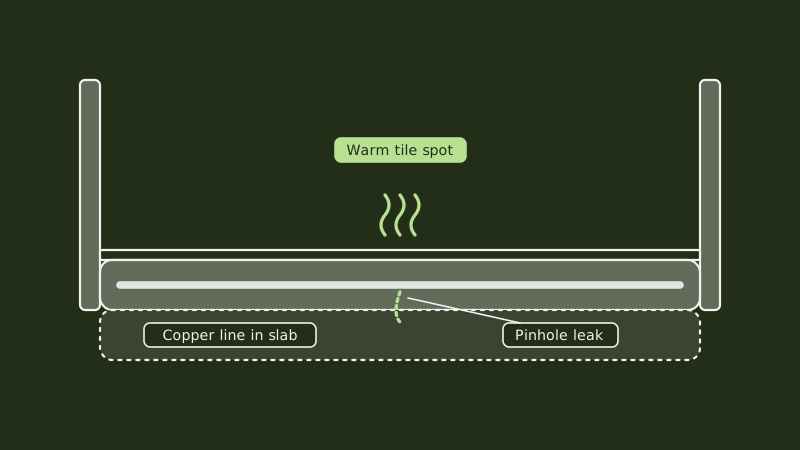
Copper from the sixties is not failing everywhere, yet at 50 to 60 years it is entering the stretch where pinhole leaks, brittle solder joints and tired shut-off valves show up. Drains in some houses are cast iron or early plastic. The other common weak point is the water heater, often replaced once already. If you see a damp patch on a floor or a warm spot on tile, read about a slab leak and whether to repipe.
Where does Huntington Beach tap water come from?
Mostly from the city's own wells. The 2026 water quality report says that in 2025 the supply was 85 percent local groundwater from nine City wells and 15 percent treated imported water bought through the Municipal Water District of Orange County. The city also keeps emergency connections with Fountain Valley, Seal Beach and Westminster.
That mix sets the water's hardness. The report lists groundwater averaging 162 mg/L as calcium carbonate, about 10 grains per gallon, and the imported supply at 236 mg/L, about 14 grains, with samples ranging from 3.5 to 16 grains. So it counts as moderately hard to hard. Hardness is not a health issue, but it leaves scale in tanks and on shower glass. Our page on preventing scale buildup is the place to start.
What plumbing problems are common in Huntington Beach?
Aging copper and aging appliances. Expect pinhole leaks in supply lines, stuck angle stops under sinks, corroded water heater fittings, toilets that keep running, and pressure that has crept too high. Some houses on concrete slabs have supply pipe in or under the slab, so a buried leak can surface as one warm tile or a water bill that creeps up with no obvious cause.
Check the pressure first. When a regulator quits, full street pressure hits fixtures built for less, and a gauge to test it costs little. Read how a plumber handles changing a water pressure regulator before you assume you need a new pipe. For a large, repeating pattern of leaks, a repipe in PEX is the usual alternative to chasing each failure.
Do mobile homes, condos and apartments in Huntington Beach need different plumbing work?
Yes, a little. The draft housing element counts about 48 percent of occupied homes as detached houses, 4 percent as mobile homes and the rest as attached units, duplexes and apartment buildings. Mobile homes use smaller, lighter plumbing under the floor, and apartments and condos share risers, so a leak may involve the association or landlord.
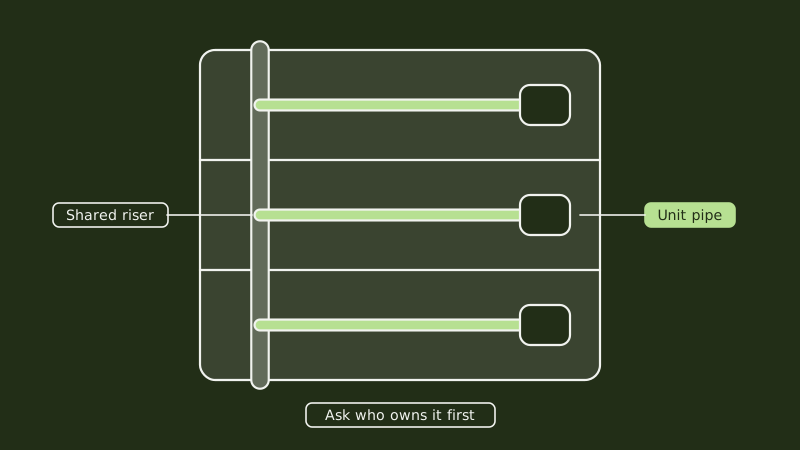
For a mobile home, see our notes on a mobile home plumbing inspection. In a condo or an apartment building, ask who owns the pipe before you call. If a leak starts above you or in a shared wall, the building usually has to be involved first. For trouble confined to your own unit, a plumber can usually start from your side, with the owner's consent where the lease or rules need it.
What will a Huntington Beach plumber visit cost?
Expect the county's usual spread: published Orange County cost guides cite hourly labor of about $100 to $200 and a trip or diagnostic fee somewhere near $100 to $250. Nothing about Huntington Beach pushes a visit far outside that band, though a slab leak, a repipe or a tank swap are priced job by job and sit far above a leaky faucet.
Age and reach set the total: older houses hide surprises, and buried pipe takes longer. Slab work may need floor demolition and repair. A garage water heater on a 1970s house may need new venting or strapping to meet today's rules. Typical ranges sit on the pages for water heater replacement cost and unclogging a drain, and the real number arrives in writing before work begins.
Which city office handles plumbing permits in Huntington Beach?
The City of Huntington Beach, through its building and safety staff. Swapping a tank heater or repiping the house normally brings a permit, and the plumber on the job applies for it. Each Orange County city runs its own permit counter, so Santa Ana's rules do not apply here. Call the city to confirm current forms, fees and inspection scheduling.
Most paid plumbing in California must be done under a contractor license, gas piping included. Smell gas? Get outside first. Next, phone SoCalGas, 1-800-427-2200. For an injury, dial 911. Our overview of permits for plumbing work shows what pulling one involves.
What should you know about coastal Huntington Beach when you book a plumber?
Near the beach, summer weekends and limited street parking can slow a visit, so mention gates, alleys, short driveways and where a van can stop. If you live close to the water, salt air can eat at exterior fittings such as hose bibs and valves, so check outdoor metal when you hunt for a leak.
Santa Ana Plumbing Co takes calls weekdays from 9am to 5pm, and the quote page works at any hour. With water pouring out, close the main valve, then see our guide to plumbing emergencies. Name the room, give the build year and note whether the hot or cold line is leaking.
Common questions
Is Huntington Beach tap water hard?
Somewhere between moderately hard and hard. The city's 2026 report lists groundwater at about 10 grains per gallon on average and imported water at about 14, with samples between 3.5 and 16. The blend changes through the year. Scale in the water heater is the usual consequence, and a softener is an option rather than a necessity.
What are typical plumbing rates around Huntington Beach?
County cost guides point toward $100 to $200 hourly, plus a diagnostic or trip fee near $100 to $250. The job drives the total. Simple repairs fall low in that range, while slab leaks, repipes and water heaters are quoted individually, and the quote arrives in writing before anything is started.
Does a new water heater in Huntington Beach need a city permit?
Generally, yes. Water heater replacement is permitted work in California cities, and the plumber normally applies through the City of Huntington Beach and arranges the inspection. Confirm with the city's building staff for current requirements. Strapping and venting rules apply too, and an unpermitted swap can raise questions at resale.
Can I get a plumber for a mobile home in Huntington Beach?
Yes. About 4 percent of the city's occupied homes are mobile homes, and the plumbing is smaller and lighter than in a site-built house. Say it is a mobile home when you book so the plumber brings suitable fittings. If the park owns the lines to your unit, ask the park first.
Is a repipe worth it for a 1960s Huntington Beach house?
It can be, once leaks repeat or water turns brown. Most houses from that decade have copper, which can serve many years, so a single leak does not mean a full repipe. A plumber can pressure-test and inspect, then price both a repair and a whole-house PEX repipe.
Sources
- City of Huntington Beach 2026 Water Quality Report (2025 data)
- Huntington Beach 6th cycle housing element draft (ACS 2019 housing age and unit types)
- Huntington Beach 5th cycle housing element
- Published Orange County plumbing price guides, checked November 2026
Last updated