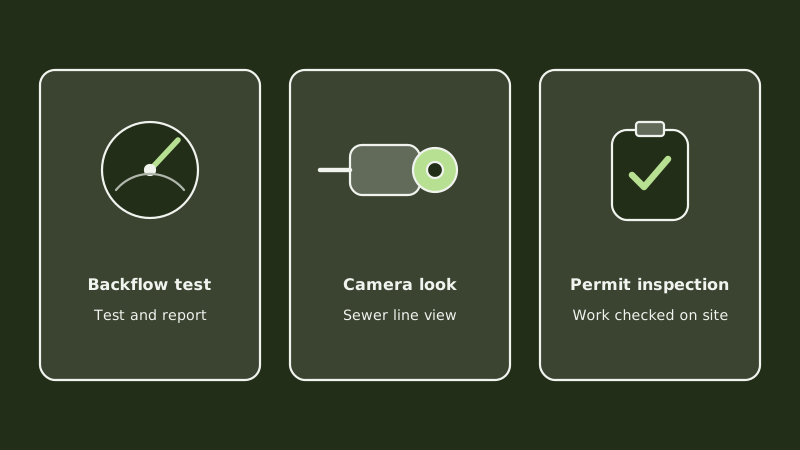
Around Southern California a home backflow test typically runs $75 to $150 for each device, while a sewer camera inspection lands near $125 to $500. The two are unrelated. A backflow test checks a valve that keeps dirty water out of the public supply and is required on a schedule. A camera inspection looks inside a drain line and is something you choose, usually before buying a house or after repeated clogs.
If your question is the test itself, who must do it and when, start with our guide to backflow certification and testing. This page is about money, plus the permit inspections folded into certain plumbing jobs. If you have a particular job in mind, the quote page takes the details.
What do backflow testers charge?
Testers publish $75 to $150 per device for an ordinary home unit. Reduced pressure assemblies, the larger and fussier kind, sit higher, from about $125 up to $400 in some guides. A second device on the same trip often costs less than the first, and a device that fails and needs fixing adds a repair bill, commonly $100 to $300 for simple work.
The table shows the ranges testers publish.
| Item | Typical range |
|---|---|
| Standard residential device test | $75 to $150 |
| Reduced pressure assembly test | $125 to $400 |
| Each added device, same visit | Often less than the first |
| Repair after a failed test | $100 to $300 for simple work |
| Trip charge or minimum | varies, some set a minimum for a small job |
Two things shift the bill. First, travel: some testers price per device only in dense areas and charge a higher minimum elsewhere, so a single test far from their base can cost more than the table. Second, what kind of device you have. A pressure vacuum breaker on a lawn sprinkler line is the common home case. Most Southern California houses have no backflow device at all and need none, so check before you book.
Who makes me test a backflow device, and how often?
California's cross-connection rules set the minimum at one test every year, and a water supplier may ask for more. The supplier sends notices and keeps the paperwork. For a Santa Ana address that supplier is the city's water system, so confirm the exact process with the city's Public Works Agency.
The State Water Resources Control Board's cross-connection handbook is the statewide reference. It sets annual testing as the minimum and expects the test to be done by a tester the local program accepts. A tester's trade credentials are not always enough on their own, because water districts keep approved lists, so ask who the city will accept before you book anyone.
The results go to the supplier, usually within a few weeks, and the tester normally files them for you. If a device fails, the owner repairs and retests, typically within a short window set by the supplier. Skipping the test is the risky choice, since the supplier follows up on overdue and failed tests.
For tester options, details on device types and what a test involves, see the pages on backflow prevention assembly testing, residential backflow testing cost and finding a backflow testing company.
How much is a camera look inside the sewer line?
Most guides show $125 to $500, with typical quotes bunched around $250 to $350. A thorough recording of the entire sewer lateral for a house purchase often costs $250 to $600. With no cleanout, the camera has to enter through a roof vent or a removed toilet bowl, and the price goes up.
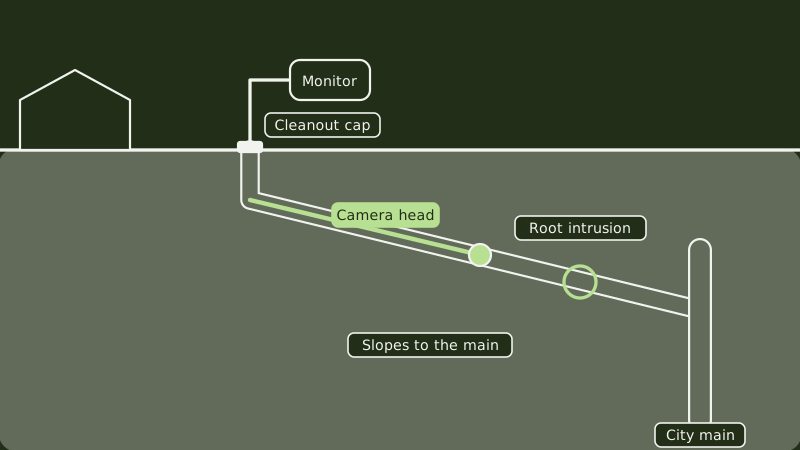
One national guide reports a far higher average, near $995 per visit with a spread up to $1,725, which likely reflects long lines, hard access and bundled work. Use the lower cluster as your planning figure and ask for a quote that names the length covered and whether locating the damage is included. Extra footage beyond a standard length is commonly charged per foot.
Why bother? A lot of Santa Ana housing was built between the 1920s and the 1950s, and sewer pipes of clay or cast iron from that period can crack, fill with roots or drift out of line. A camera shows what a visual check cannot. For a buyer, the video can reveal a repair that costs thousands, which is a lot to discover after closing. For an owner with recurring blockages, it shows whether the cause is a one-off clog or a failing pipe.
When does plumbing work need a permit, and what does inspection add?
Santa Ana wants a permit before anyone installs, alters, repairs or replaces a regulated plumbing system, and the city inspects the finished work. Water heaters, repipes and new gas lines are typical. Fees depend on the job, and the current schedule was not available to me, so ask the Building and Safety counter or the contractor for the number.
The city's Building and Safety Division takes applications at its counter, and its pages describe requesting an inspection with the permit number, address and inspection type. The contractor normally obtains the permit and arranges the inspection, and the cost shows up as a line item on the quote. Ask to see it itemized.
A few common questions fall under this heading:
- When is a permit required? Whenever the work changes or replaces a regulated system. Replacing a faucet or unclogging a drain generally does not. Water heaters, gas lines, repipes and new drains usually do.
- Can a homeowner pull one? Often, for work on a home you live in, though local rules differ, and gas work belongs with a contractor. Ask the building division.
- How long does a permit last? The California Building Code sets a 180-day rule: a permit lapses if work does not start within 180 days or stops for 180 days. Many cities change that, so check the permit itself.
- Is there an online route? Many city building departments take permit applications online; check what the City of Santa Ana offers for your kind of work.
Our guide on how to pull a plumbing permit goes through the steps.
What is a fair price for an inspection, and how do I avoid overpaying?
A fair price names what is inspected and what comes with it: the visit, the report, filing with the water supplier, a retest after repair. Set two quotes for the same scope side by side, and treat an unusually low test price with suspicion if an expensive repair seems to follow it.
Practical ways to keep the bill sensible:
- Book the backflow test with the camera or other work if the same company can do both, so one trip charge covers both.
- Combine devices: testing two on one visit usually costs less than two visits.
- Ask whether the tester files the report with the water supplier and whether that is included.
- Keep the previous year's report and a note of the device's location.
- Run the contractor's license number through the state board's search. Permitted work needs one, and so does any job whose labor and materials together pass $1,000.
You can see more of our services from the home page.
Common questions
What should I budget for the annual test?
Budget $75 to $150 for one home device in Southern California, more for large assemblies. A tester may drop the per-device price when several are done together, or set a minimum for a single one. Confirm whether the tester files the report with the water supplier.
Does the price include repairs if the device fails?
Usually not. The test price covers the test and the paperwork. A failed device is repaired or replaced as a separate job, commonly $100 to $300 for simple work and more for a replacement, followed by a retest. Ask whether a retest after repair is part of the first price.
Do permit pages for places like Waukesha or San Francisco apply to me?
No. A permit comes from the building department where the property sits. Pages for other cities, San Francisco, Waukesha or Brookfield in Wisconsin, or Colorado's DORA, set different fees and steps. For a Santa Ana home, the office is the city's Building and Safety Division.
Is a camera inspection worth the money before buying a house?
For an older Santa Ana home, usually yes. A sewer scope can cost a few hundred dollars and may reveal cracked or root-filled clay or cast iron pipe that costs thousands to fix. Get the recording plus a short written summary of what the camera found.
Who can test a backflow device?
A tester the local water supplier accepts, usually one who holds the backflow tester credential the supplier asks for. Check the supplier's approved list before booking. A plumber can often arrange this. Always get a copy of the report, even if the tester files it for you.
Sources
- State Water Resources Control Board, Cross-Connection Control Policy Handbook
- Los Angeles County Public Works, backflow prevention program (usually $75 to $150 per device)
- Find Backflow Testers, backflow testing cost 2026 (national figures, read November 2026)
- HomeGuide, sewer camera inspection cost 2026 ($125 to $500)
- City of Santa Ana, When is a Permit Required?
- 2022 California Building Code, section 105.5 (permit expiration)
- California Contractors State License Board, AB 2622 minor work limit
Last updated