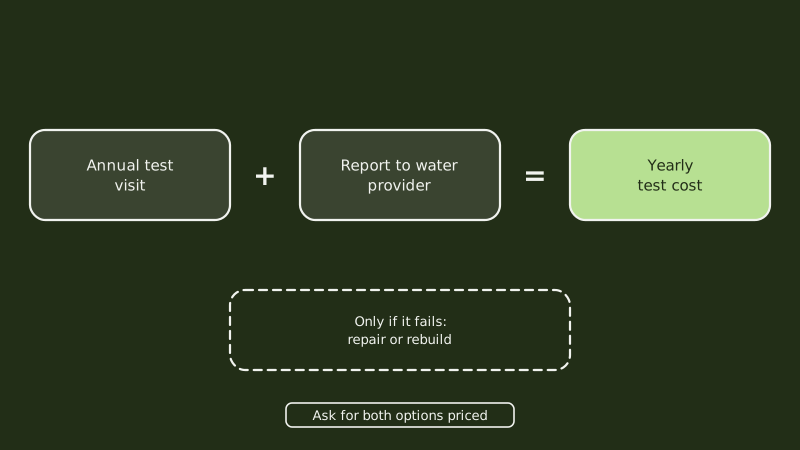
Plan on about $75 to $250 per device for a routine annual backflow test at a home, based on 2026 published guides, with $75 to $150 the most common figure. A failed test raises the bill: simple repairs are published at about $100 to $300, and then the device is tested a second time. The rules behind the test, and who has to have one, are on the main page about backflow testing.
What does a residential backflow test cost?
Published guides put a routine residential test between $75 and $250 per device. The test is a short visit: the tester attaches gauges, checks that the valves and check mechanisms hold, and files a report with your water supplier. Extra devices at the same address usually cost less each.
The figure covers the test only. Repairs, a new device, a travel fee for a distant address and after-hours work are priced separately. Some testers include the paperwork filing in the price and others charge for it, so ask. A bargain headline price that adds charges for the report or each extra device can finish above an honest all-in quote.
| Item | Published range |
|---|---|
| Routine annual test, one device | about $75 to $250 |
| Repair after a failed test, simple work | about $100 to $300 |
| Replacing a device | priced on its own quote |
| New device and installation | priced by job, often several hundred dollars and up |
Does a house need a backflow device at all?
Not every home does. A backflow assembly is required where a cross-connection could let contaminated water flow back into the public supply, and the water supplier decides which properties qualify. In homes the common cases are lawn sprinkler systems with a pressure vacuum breaker, fire sprinkler systems, and properties with a second water source such as a well or pond.
If you have a device, you will usually know. It is a metal assembly with test valves near the meter or on the irrigation line, often outside by the house. The City of Santa Ana runs the water system for its own customers, and a notice arrives when a test falls due. No notice and no device usually means no test. Unsure? The water division can tell you, since an assembly you had forgotten still needs its yearly check.
Why is testing required every year?
Water agencies across California point to Title 17, section 7605 of the state regulations for a yearly test of every backflow assembly, plus a retest after installation, repair or relocation. The reason is that springs, seals and check valves wear or foul, and a device that passed last year can fail this year without any sign.
Testing is done by a person with a current backflow tester qualification recognized by the water supplier, and the report goes to the supplier. A supplier may shut off service if tests are not kept up. Details of local forms and deadlines come from the City of Santa Ana, and we have not verified the city's current procedure for this page, so check with the water division before booking. The page about backflow prevention assembly testing covers how a test works in more depth.
What happens if the device fails the test?
A failure means the device is not stopping reverse flow. It then has to be fixed or swapped and retested, normally by a date the supplier sets. Published prices for simple repairs run roughly $100 to $300. An old or badly damaged unit may be beyond rebuilding, and a replacement costs more, so ask for both options priced.
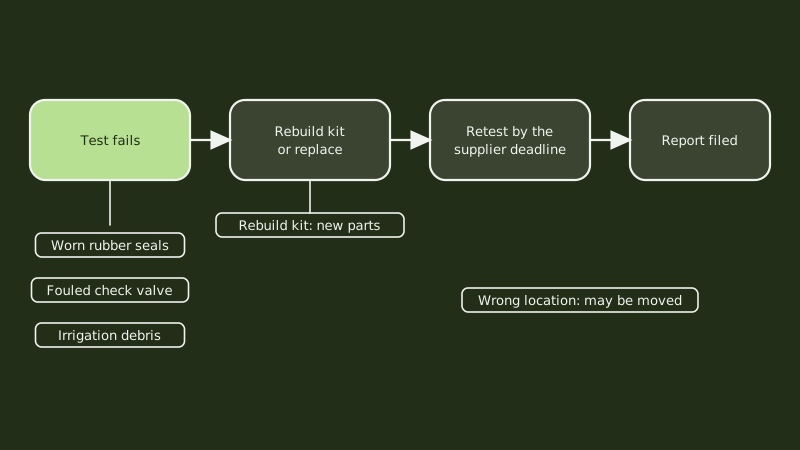
Common causes are worn rubber seals, a fouled check valve and debris from irrigation lines. A rebuild kit replaces the internal parts. A device installed in the wrong place, for example below the height the code requires or inside a box that floods, may need to be moved. Ask the tester to explain the fault and show the readings, and get the repair priced in writing before you agree.
How do you keep the cost down?
Book early, bundle devices at one visit, keep the device clear and accessible, and ask what the price includes. Winterizing is not a concern in Santa Ana as it is in cold states, but debris and heavy irrigation cause trouble. Keep valve boxes clear of dirt and standing water so the tester can reach the test cocks.
Look at the device before the tester arrives. A visible leak from the relief port, a cracked body or a missing cover is worth fixing first. If your device is old, ask whether a rebuild is due, since doing it at the test visit can save a second trip. Do not tamper with the assembly. Shutoff valves and test cocks are for the tester, and altering the device can void the test and breach water rules.
Does a backflow test include a camera inspection?
No. A backflow test checks the assembly's valves with gauges. A camera inspection is a different service, in which a compact camera travels along a drain or sewer to locate blockages, breaks or roots. The two are unrelated, though both are sometimes offered by the same plumbing company, and a visit for one can lead to a quote for the other.
If a plumber suggests a camera inspection during a backflow visit, ask what problem it would answer. A camera inspection earns its cost when you have repeat clogs, a slow main line, or are buying an older house, where cast iron and clay drains, which appear in Santa Ana houses of the 1920s through 1950s vintage, may be failing. It does not replace the annual test, and the test does not replace an inspection of the sewer.
Who can do the test, and what permits are involved?
Only a tester whose qualification the water supplier accepts can do the test itself. Repairing, replacing or installing a device is plumbing work, and a state contractor license is compulsory once labor plus materials reach $1,000, or whenever a permit is needed, so for bigger jobs look the plumber's license up with the state board.
Installing a new device usually needs a permit and, afterward, a test. In Santa Ana, building permits come from the City of Santa Ana, and the water division handles the backflow program. Other Orange County cities and water districts have their own rules. Ask the plumber who files the paperwork. For commercial sites, see what a commercial plumber does, where backflow testing is one of several compliance jobs.
Common questions
What will a home sprinkler backflow test cost?
A single residential irrigation device is published at about $75 to $250 for the test. A fee for the report or a travel charge may be extra. Request an all-in price for your address, plus the rule for what changes if a repair turns up.
How often does a home backflow device need testing?
Once a year at minimum, under the state rule California water agencies cite, and again after installation, repair or relocation. Your water supplier sends the notice and sets the deadline. Keep a copy of each report, because the supplier may ask for it.
May a homeowner run the test personally?
Not legally in practice. Testing requires a tester with a current qualification the water supplier accepts, and the supplier needs the official report. A homeowner can clear debris around the device and keep it accessible, but the test itself, and any repair of internal parts, is for a qualified person.
Where do I find a tester for a Santa Ana home?
Start with your water supplier's notice, which may list requirements for testers. A plumber can often arrange a test, and our guide to choosing a backflow testing company lists what to ask. Compare published rates on the page about backflow testing rates before booking.
To have a plumber arrange a test or price a repair, use the quote page. The rest of our plumbing coverage starts at the Santa Ana Plumbing Co home page.
Sources
- Los Angeles County Public Works, backflow prevention program (usually $75 to $150 per device)
- Find Backflow Testers, backflow testing cost 2026 (residential $75 to $250 per device)
- Title 17, California Code of Regulations, section 7605 (annual backflow assembly testing), as cited by California water agencies
- City of Santa Ana Public Works, water division (local backflow program; not opened for this page, contact the city to confirm forms and deadlines)
Last updated