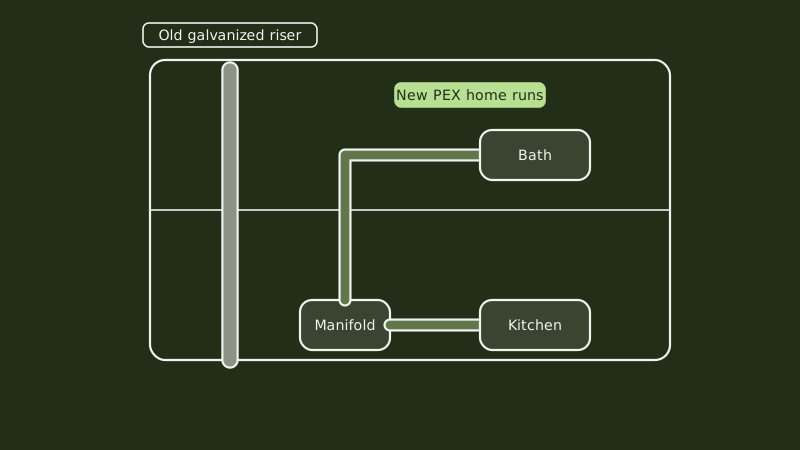
Most 2026 price guides land a whole-house repipe anywhere from $4,000 up to $15,000 for just the water supply lines, averaging near $7,500 nationally. PEX anchors the cheap end, copper the expensive end. An old house can overshoot once drain lines, gas piping, wall repair and a permit are added. Every service we arrange is listed on the Santa Ana Plumbing Co home page, and this guide attaches numbers to the replacement job.
What does re-plumbing a vintage house run?
Replacing all the supply plumbing usually costs between $4,000 and $15,000, more for a large or multi-story house. For a two or three bath house, PEX sits toward the bottom of that range and copper toward the top. Drains, gas lines and finish repair are normally quoted on separate lines.
Several things move the price:
- Size and layout. More fixtures and more floors mean more pipe and more access work.
- Material. PEX is cheaper in parts and labor than copper.
- Access. Open crawl spaces and attics are cheap to work in. Plaster walls, tile and tight spots are not.
- Labor. One 2026 source says labor makes up roughly 70 percent of the total.
- Scope. A partial repipe, covering one bathroom or the kitchen supply, costs less than a whole-house job, and the written quote sets the price.
The figures come from price guides, many of them written by contractors and lead-generation sites, so hold them loosely. Only a quote for your own house settles it. The supply-side detail sits in what a repipe costs.
What do the extras cost in an old Santa Ana house?
Beyond the pipes themselves, budget for drywall or plaster repair, paint, a permit and inspection, and any hidden problems. The written quote should show wall repair and permit fees on their own lines. Plan a cushion for surprises behind the walls.
In older houses the supply lines are rarely the only aging system. What to have the plumber inspect:
- Drain lines. Houses predating the 1950s may drain through cast iron or clay that cracks, shifts or collects roots. A camera inspection shows their condition before anyone quotes a repipe. We found no dependable local price for drain replacement, so get that figure in writing.
- Gas piping. If the house burns gas, the gas line and its shutoffs are separate work that California requires a contractor license for. A gas odor means leaving at once and phoning SoCalGas from the sidewalk, 1-800-427-2200.
- Shutoff valves and fixtures. Old stop valves under sinks and toilets often fail when moved, so many plumbers replace them during a repipe.
- Water heater connections. New lines may need new connections, an expansion tank or a seismic strap.
- Pressure regulator. If water pressure is high, a regulator may be added. See our page on pressure regulator replacement cost.
Which pipes in older Santa Ana houses need replacing first?
Galvanized steel and polybutylene are the two most likely to be replaced, followed by old copper that has begun to pinhole. Santa Ana has plenty of 1920s to 1950s bungalows and postwar tract houses, where original galvanized steel is still found. Warning signs are brownish water, sinking pressure and weeping joints.
Polybutylene, a gray plastic used in some houses decades ago, is its own problem, and our page on polybutylene pipe replacement covers it. Copper tubing can last a long time, though it can pinhole from corrosion or stray electrical current. Santa Ana water is hard, about 250 parts per million by the city's own figure, and some local contractors link hard water with earlier pipe wear, though that is not settled. If you live in a historic area such as Floral Park, ask the city what rules apply to your home before a plumber opens walls, as our page on plumbing in Floral Park describes.
Is PEX or copper the better choice for an old house?
For most older Santa Ana homes PEX is cheaper and easier to run through existing walls, which cuts demolition. Copper costs more but has a long record and does not mind sunlight. PEX has been approved in California's plumbing code since 2009. Neither is a bad choice, and the better one depends on budget and access.
Our PEX vs copper page compares them in detail, and PEX-A against PEX-B sorts out the PEX types. For how the work itself runs, see how they repipe a house and the overview of PEX repiping.
Do I have to replace everything, or can I do part of it?
No. Many houses are repiped in phases. A plumber may replace only the failing branches, a bathroom during a remodel or the kitchen line, then do the rest later. Partial work costs less up front, but several repairs over time can add up to more than one full job.

If you are planning a bathroom remodel, the cheapest moment to renew supply lines and valves is while the studs are exposed, as the bathroom remodel plumbing guide explains. If a single leak set this off, weigh slab leak repair against a repipe first. The test is whether the same pipe keeps failing: the second or third leak is the signal that patching is no longer cheap.
Is a permit or a contractor license part of the deal?
Yes to both. Plumbing permits in Santa Ana come from the Building and Safety division, and neighboring cities run their own departments. Any job worth $1,000 or more falls under the state contractor license rule, and a repipe almost always does. The CSLB website carries a search by license number.
Settle who files the permit and who books the inspection. A quote that skips the permit to save money invites trouble at resale or with an insurance claim. To have a local plumber look over your house, send a price request.
Common questions
How many days does repiping an old house take?
Several days is common for a whole-house job, longer with a big house, plaster walls or awkward access. The taps run dry for part of each day. The plumber gives a schedule after seeing the place, and patching and paint typically follow.
What should a repiping bid spell out?
It should name the pipe material and the repair work included, say who pulls the permit, explain how water service is handled each day, and cover what happens when more problems surface. Ask which license number the contractor works under and verify it yourself.
Would new pipes bring my water bill down?
Only if the old pipes were leaking, in which case the bill should fall back to normal. New pipe stops leaks and can restore pressure, but ordinary use stays the same. If the bill jumped, rule out other causes first by reading why a water bill climbs.
Does someone need to be present all day?
An adult should be present at the start and whenever the plumber needs a room, the heater or the main valve opened up. Between those moments many homeowners come and go. Clear valuables and breakables from any wall that will be cut.
Is it livable while the work goes on?
Usually, with dust, noise and the supply cut off at intervals. Plumbers often stage the work so the taps run again by evening. Raise this when you compare bids, and plan around any household member who needs steady water, such as someone on home medical equipment.
Sources
Last updated