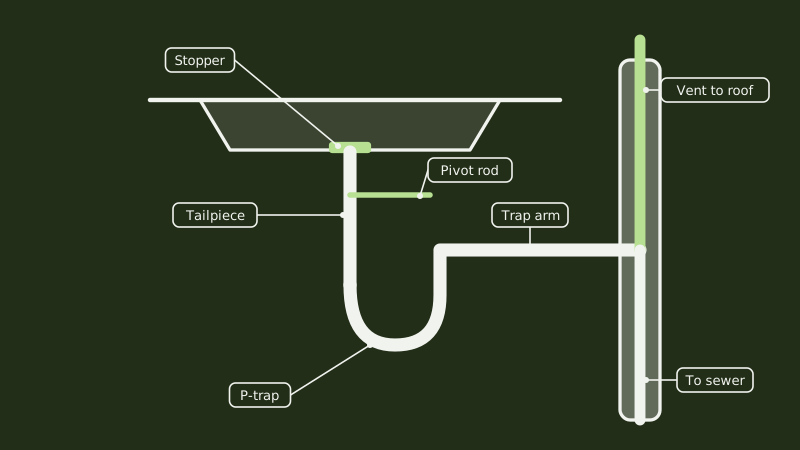
Water leaves a sink at the speed of its narrowest point. Hair, soap film, grease and scale shrink that point a little at a time, so the sink slows over weeks, not in one go. Watch how it behaves and you can usually name the culprit before touching a tool. For blockages across a whole house, begin with clogged drain and toilet help in Santa Ana, then come back for the sink itself.
What is making my bathroom sink drain slowly?
Hair and soap residue, nearly every time. Strands snag on the pop-up stopper's pivot rod or on the crossbar of the drain, trap lather and toothpaste, and form a gray plug just below the bowl. Scale from mineral-rich water roughens the pipe wall and makes the buildup grip harder.
I have not checked the current hardness of Santa Ana's tap water, so take the scale point as a general likelihood. What I can say from how drains behave: a sink that was quick last spring and sluggish now has a plug forming, not a broken pipe.
Read your sink's behavior against this list:
| What you notice | Likely cause | Where to look |
|---|---|---|
| Drains fast, then crawls near the end | Hair at the stopper | Lift out the stopper |
| Drains slowly every time, steady pace | Film in the trap or tailpiece | The U-shaped trap |
| Gurgling, bubbles in the bowl | Air starved by a vent problem | Roof vent, branch line |
| Sink and tub both sluggish | The line they share is narrowing | Past the trap, needs a plumber's cable |
| Slow only with the disposal side | Jammed disposal or grease | The disposal outlet |
What slows a kitchen sink, double bowls included?
Kitchens clog with fat, coffee grounds and starch. Warm grease flows away as a liquid, then sets on cool pipe, and every scrap that follows sticks to it. On a double sink, run water into each bowl alone. If only one is slow, the fault is on that side. If both crawl, the shared tailpiece or line beyond is partly blocked.
Disposals add a wrinkle. A grinder breaks up scraps but leaves the grease, and a jammed or worn unit slows its own bowl. Deeper reading sits in the pages on kitchen sink blockages and a garbage disposal that will not drain.
When you plunge one side of a double sink, seal the second drain with a damp rag, otherwise the force escapes into the other bowl and does nothing.
Can a sink drain slowly with no clog at all?
Yes. Three clog-free causes exist: a restricted vent, a pipe with a belly that holds water, and scale that has narrowed the bore evenly. Gurgling or bubbles are the vent signature. A sink that never drains fully and leaves a puddle in the pipe points to a dip in the line.
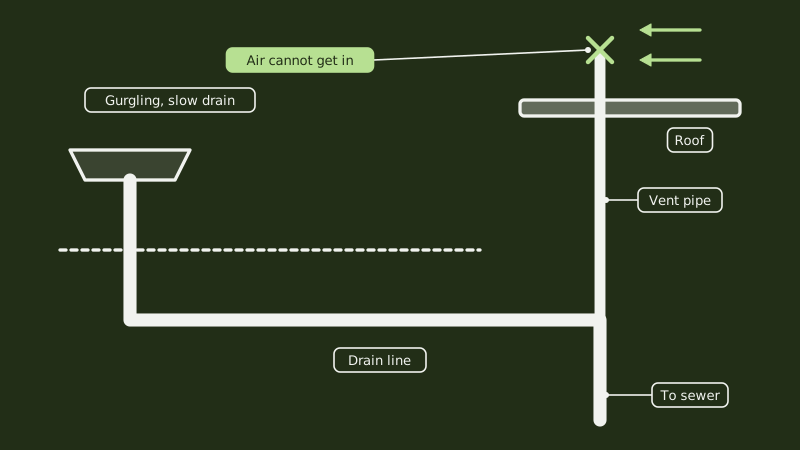
Drains need air behind the water, much like a bottle that glugs when tipped. A blocked roof vent, whether from leaves or debris, starves the line, and fixing it means roof access, which is plumber work. Renovation runs laid with too little slope can also move water lazily from day one.
Plenty of Santa Ana houses dating from the 1920s through the 1950s still run on cast iron or galvanized drainpipe. They corrode on the inside and grow a rough crust that narrows the passage and snags debris. If clearing the trap never lasts and the house is that age, ask a plumber about a camera look.
Which fixes can I try at home?
Work from least effort to most: clean the stopper, plunge with the overflow sealed, then empty the trap. Pull the stopper and wipe away hair and slime. Press a damp cloth into the overflow slot, set a cup plunger flat across the drain and pump about a dozen times. If nothing changes, park a bucket under the U-bend and unscrew its slip nuts.
Full sequence for most bowls:
- Wearing gloves, lift the stopper and pick out the debris.
- Plunge with a cup-style plunger over a wet seal.
- Take apart the trap over a bucket, rinse it, and check the washers before refitting.
- Thread a thin plastic barbed strip or small hand auger into the tailpiece to catch hair.
- Finish with a steady run of hot tap water. Boiling water risks softening plastic fittings, so skip it.
Baking soda followed by vinegar is a popular household remedy. It froths and may loosen a light film, though it cannot melt a matted hairball. The page on home remedies for clogged drains sorts what helps from what is folklore, and unclogging a bathroom sink covers the bathroom routine step by step.
Avoid bottled drain chemicals as a first resort. They can splash onto skin and eyes, harm some pipes and finishes, and leave a hazard for the next person who opens the trap. Never blend two products. If you already poured one in, tell whoever arrives.
At what point should a plumber take over?
When several fixtures slow together, when relief lasts a few days before the crawl returns, when a tub or floor drain fills with backed-up water, or when a toilet gurgles as the sink empties. Each of those implicates the main line or the vent, and both need a machine, a camera or roof access.
Sink clearing is a modest job. National guides list a toilet clearing around $100 to $300 and jetting a stubborn line near $300 to $900, with one sink normally toward the low end. Figures are broken out in the unclogging cost guide and sink unclogging costs.
Anything that opens a wall, replaces pipe or needs a permit moves into contractor territory, where California requires a license once labor and materials reach $1,000. Before hiring, verify the license on the state board's website.
For a visit, our phone is answered weekdays 9am to 5pm and a plumber from nearby comes out with a price in writing. Browse the other work we arrange from the Santa Ana Plumbing Co home page.
Common questions
What is the best remedy for a slow draining sink?
Mechanical methods win. Clean the stopper, plunge, and clear the trap; together they beat most bathroom and kitchen blockages without chemicals. If the sink recovers briefly and slows again, the plug sits farther down and needs a hand auger. Fit a hair catcher and keep grease out to prevent repeats.
Will a plunger help a sink that drains slowly?
Usually, provided the overflow hole is plugged with a damp cloth and, on a double sink, the other drain is blocked. Reach for a flat-bottomed cup plunger, never the flanged toilet kind. About fifteen seconds of firm, even strokes is plenty. If a few rounds change nothing, the blockage sits past the trap.
Why is the drain still extremely slow after I cleaned the trap?
Because the restriction is past it: a branch line, a join with the tub drain, or the vent. Scale or a sag can do the same. Gurgling hints at a vent problem. Another round of plunging adds little at that stage; a long hand auger or a plumber's camera tells you far more.
How long does a slow sink take to fix?
Cleaning the stopper and trap is a ten to thirty minute chore at home. A plumber clearing a single sink often wraps up in under an hour. Main-line or vent trouble takes longer, and replacing worn drain pipe is a bigger job with its own quote and, sometimes, a permit.
Is a slow drain just going to sort itself out?
It will not. Partial blockages grow as hair and grease keep arriving, and a drain that crawls can stop completely on the busiest morning. A slow drain is the cheapest stage at which to deal with a clog, so treat it as a prompt to act now.
Sources
- California Contractors State License Board
- Published drain cleaning prices from several national cost guides, checked November 2026
Last updated