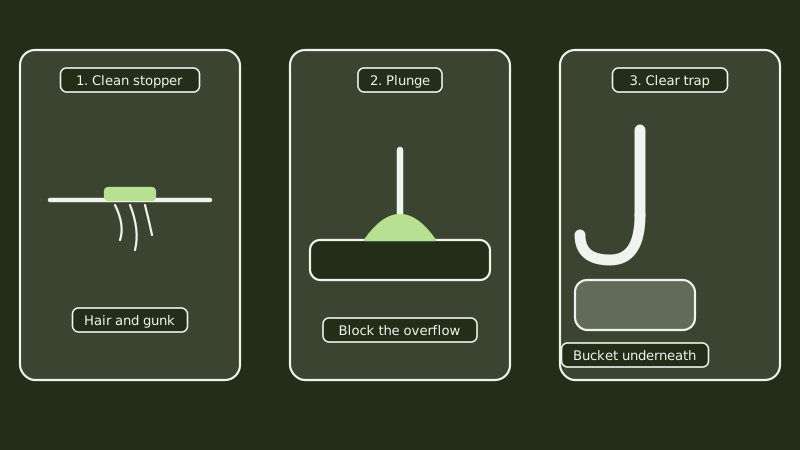
Plugs hide closer than people expect. Hair winds around the stopper, soap and toothpaste glue it into a mat, and water squeezes past slowly. The method below goes from cheapest effort to most: top of the drain, plunger, then the trap. It sits under our overview of drain clogs in Santa Ana, which covers the bigger blockages that no sink repair will fix.
What tools does clearing a bathroom sink take?
Gloves, a cup plunger, a towel, a bucket, a flashlight, adjustable pliers and a barbed plastic drain strip. A small hand auger is useful for stubborn plugs. Most homes already own nearly all of it, and a missing item is a small purchase at any hardware aisle.
Spread the towel inside the vanity, empty the cabinet and photograph the pipes before touching them, so reassembly is easy. Keep a cup nearby for small parts that roll away, such as the clip on the pivot rod. If the bowl holds standing water, bail most of it out into the bucket.
Step one: how do I clean the stopper and the drain throat?
Lift out the stopper and wash it, since hair begins collecting there. A push-pop type twists and pulls straight up. A lever-style pop-up hangs on a pivot rod that enters behind the tailpipe: loosen its retaining nut, slide the rod out and lift the stopper clear. Check how yours connects before pulling.
With the stopper out, fish down the drain with a barbed strip or a straightened coat hanger and draw up whatever is lodged. A gray, slimy clump is normal. Work slowly, because shoving it deeper makes it harder to reach.
Turn on the hot tap. If the bowl empties briskly, you are finished, and a small mesh catcher set in the drain keeps it that way. If it still crawls, step two comes next. A stopper that refuses to release is a good moment to ask a plumber, who can free it without snapping the fitting.
Step two: does a plunger really work on a sink?
It does, once the overflow is blocked. Stuff a wet rag into the overflow slot, cover the drain with an inch of water so the cup seals, and drive the plunger up and down with firm strokes for fifteen to twenty seconds. Yank it off on the last stroke. Two or three rounds is a fair trial. A toilet plunger has the wrong shape here.
Skipping the overflow seal is the usual reason plunging fails, because pressure escapes through the overflow slot rather than shoving the plug. On a vanity with two bowls, plug the second drain as well.
If water bubbles up in another fixture, or the sink gurgles but stays full, stop. That points past the sink, and what makes a bathroom sink drain slowly walks through the other causes.
Step three: how do I take apart and clear the trap?
Slide the bucket under the U-bend, spin off the two slip nuts by hand (pliers if they stick), and drop the curved section. Tip it out, pull the hair and sludge with gloved fingers, rinse, and look at the washers. Reassemble snug by hand plus a gentle quarter turn, then run water and watch for weeping joints.
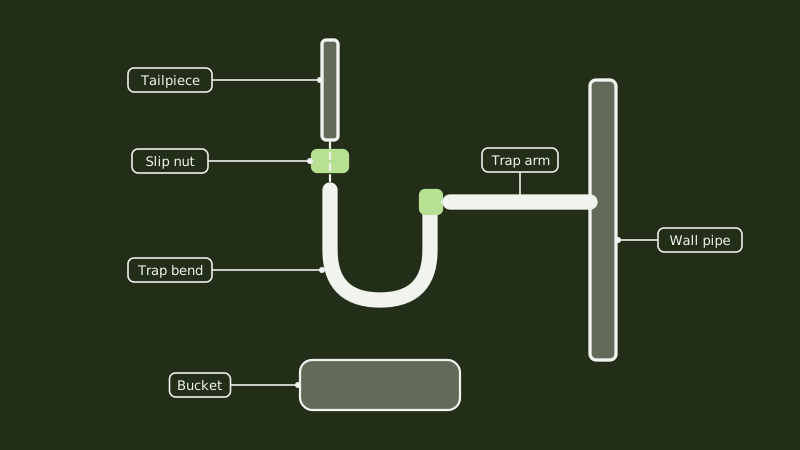
A drip after reassembly usually means a washer sits crooked or a nut needs slightly more tightening. Over-tightening can crack plastic, so go gently.
With the trap off, aim the flashlight into the wall pipe, feed the strip or hand auger in until it stops, then draw it back slowly, since hair snags on the way out. A wet-dry vacuum can also pull debris from the open pipe.
Older Santa Ana bungalows sometimes have chrome or brass traps, with galvanized or cast iron pipe in the wall. Their nuts can seize with corrosion. If one will not turn without force, leave it. Rusty pipe can fail when leaned on, and a glued, non-threaded trap is another reason to hand over the job.
Are drain chemicals or baking soda worth trying?
I would skip the bottled kind first. Strong cleaners burn skin and eyes, can eat at some finishes and fittings, and leave caustic liquid standing in the trap. Baking soda followed by vinegar is gentler but only loosens a thin film. Neither dissolves a hairball, which has to be lifted out by hand.
Poured one in already? Do not plunge, because splashback is dangerous. Wear gloves and goggles, flush with plenty of water, and name the product to whoever works on the drain next. Never combine two cleaners. The page on home remedies for clogged drains sorts out which household tricks help.
To stop a repeat, fit a hair catcher, pull the stopper monthly, and wipe toothpaste and shaving residue from the drain, rather than rinsing it down.
When is it time to hand this to a plumber?
When the sink and the tub or shower back up together, when the blockage comes back inside a week, when the trap is corroded or glued, or when gurgling shows up elsewhere in the house. Each points to a branch or main line, or a vent, which needs a machine or a camera.
Neighbors in the bathroom have their own pages: a clogged shower drain and a bathtub drain that will not clear. On price, national guides show about $100 to $300 for a toilet and $300 to $900 for jetting a stubborn line, and one sink usually lands near the bottom. See what unclogging a drain costs and sink unclogging costs.
Before anyone opens a wall or replaces pipe, check their contractor license number with the state board. Phones here are picked up on weekdays between 9 and 5, and the Santa Ana Plumbing Co home page lists the rest of the work we send plumbers out for.
Common questions
What clears a bathroom sink fastest?
Lift the stopper and remove the hair, then plunge while the overflow is blocked. Those two moves resolve most bathroom clogs in around fifteen minutes. If the bowl still drains badly, open the trap. A barbed strip fed down the pipe often catches the remainder. Keep chemicals for last, since they complicate any repair afterward.
Why is the sink still blocked after I poured drain cleaner?
Cleaners dissolve soap and grease but not matted hair, and a half-dissolved plug can lodge again lower down. The chemical may also still be sitting in the trap, which makes plunging or opening it hazardous. Use gloves and eye protection, flush with lots of water, and tell the plumber which product it was.
Can I clear a sink without owning a plunger?
Yes. Hair can be hooked out with a barbed strip, a hand auger or a shop vacuum held at the opening, and opening the trap often removes the plug outright. The plunger merely makes the first attempt easier, and it is a cheap tool to own.
How much time should I expect this to take?
Stopper plus plunger usually runs ten to twenty minutes, and the trap adds roughly fifteen more. A plumber clearing one bathroom sink commonly finishes within an hour. If it drags on well past that, the cause is likely deeper: a branch line, a vent or aging pipe.
Sources
- California Contractors State License Board
- Published drain cleaning prices from several national cost guides, checked November 2026
Last updated