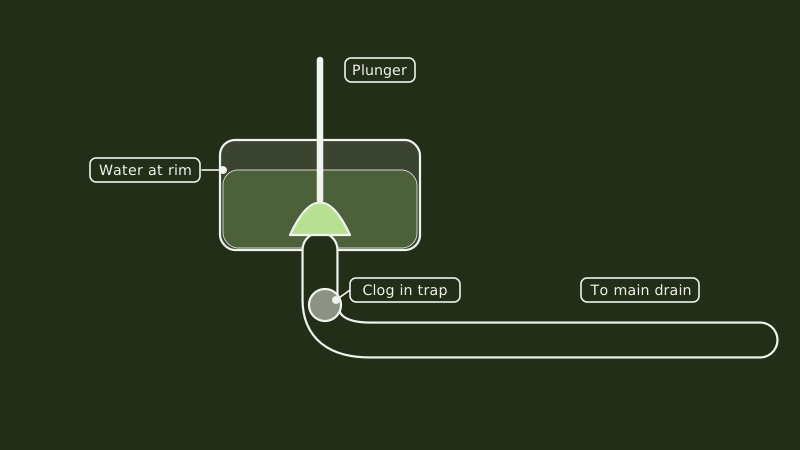
A toilet that will not drain has a mechanical problem, and the cure is mechanical too. Stop the inflow, work a flange plunger with slow, firm strokes, and bring out a closet auger if that fails. Hair and wipes get the blame, but a wad of ordinary paper does it just as often. When the trouble reaches beyond one bowl, the clogged toilet service is the route to take.
What comes first when the bowl is rising toward the rim?
Stop flushing. Lift the tank lid and press the flapper shut. Or twist the supply valve on the wall shut, clockwise, until it stops turning. Lay towels around the base, then give the bowl a few minutes, because a slow clog sometimes settles without help.
The wall valve is a small oval or round handle low on the supply pipe. Keep a bucket nearby and put on rubber gloves, as bowl water can carry waste. Children and pets should stay in another room. If the real culprit is a tank that will not stop filling, the page about a toilet that runs on covers that fault.
How do I plunge a toilet properly?
Pick a flange plunger, with a soft rubber sleeve tucked inside its cup. Check that the bowl holds enough water to submerge the cup, seat the sleeve in the drain opening, push gently to expel air, then pump with steady strokes for around twenty seconds. A tight seal does the work, not brute force.
A few details that decide whether it works:
- A flat cup plunger made for sinks seals poorly on a toilet. The flange version is the right tool.
- If the bowl is nearly dry, carry a bucket of water over until the cup is covered. Stop before it spills.
- A good squirt of dish soap, or warm water poured from about waist height, can help shift a clog. Boiling water can crack porcelain, so skip it.
- When the level drops, flush once and watch closely. If it creeps up, stop and plunge again.
Why does it block at all? Flush toilets usually clog because something unsuitable went down, or too much paper at once, and modern low-flow bowls leave less margin for error. Anything sold as a flushable wipe is a frequent offender.
What if plunging gets nowhere?
Reach for a closet auger, a short cable with a curved tip made for toilets. Feed the tip down the drain, crank to snag or break up the plug, then retract the cable and flush. It goes deeper than a plunger, and its sleeve shields the porcelain. Basic ones sell cheaply at hardware stores.
Turn the handle in one direction without forcing it. If the tip catches a hard object such as a child's toy or a toothbrush, wind it back and the item may follow. A garden-variety sink snake is the wrong tool here, since the bare metal scratches a bowl.
Some blockages only come out when the toilet is lifted off its flange and cleared from below. Leave that to a plumber. A toilet repair visit is described on its own page.
Is bottled drain cleaner worth trying on a toilet?
No. Chemical cleaners frequently fail to clear a toilet, and they leave a bowl of caustic liquid that burns skin if it splashes back during plunging. They can also eat at old pipe and seals. Combining products is worse, since some mixes give off toxic gas. Plunger and auger are the safe tools.
This matters more in older Santa Ana houses. Many houses from the bungalow era and the postwar boom drain through cast iron or clay, where cracks and roots are common and harsh chemicals do no favors. If a cleaner already went in, warn whoever works on the toilet before they reach into the bowl.
How can I tell the blockage is farther down the line?
Watch the other fixtures. Sluggish shower and tub drains, a gurgle each time the toilet flushes, or a tub that fills with gray water during laundry all indicate a shared line is partly shut. A toilet that jams again right after clearing says the same. Those need a drain machine, which means a plumber.
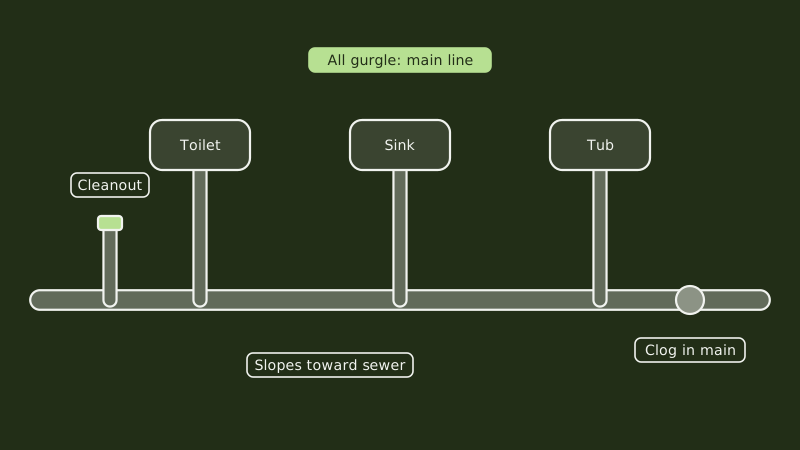
Roots entering a sewer lateral, a collapsed section or years of buildup are the usual suspects, and only a camera inspection settles which. If sewage rises in a tub or shower, stop running water in the house, because each flush and each laundry load pushes more toward the same blockage. For the smaller drains, see clearing a shower drain, the kitchen sink and home remedies for slow drains.
At what point is a plumber the better call?
Hand it over once plunger and auger have both failed, the same toilet clogs within days, several fixtures misbehave, sewage is coming back up, or something solid went in. A rocking toilet or a leak at the base is another reason, because the wax seal may have failed.
Cost swings with the cause and the method. The numbers we found are laid out in drain clearing prices. If the fixture itself is tired, what a toilet install costs shows the other path, and base leaks have their own page on toilet leak repair. When you want a local plumber to take a look, request a price. Everything else we arrange is on the Santa Ana Plumbing Co home page.
Common questions
Can I use the toilet again straight after it clears?
Yes, once it flushes normally. Flush once, watch the water level, and check around the base for leaks. If it clears and then slows again, part of the plug is probably still there or a drain problem lies farther down. Wipe the floor and your tools with disinfectant, since splashes carry waste.
Do tree roots really block indoor toilets?
In older properties they can. Roots slip into hairline cracks in a sewer lateral and knit into a net that snags paper. The tell-tale signs are slow drains all over the house, gurgling and repeat clogs. A machine cuts the roots back, and a camera shows if the pipe is damaged enough to need repair.
What keeps a toilet from clogging again?
Flush only human waste and toilet paper, and use less paper per flush. Keep wipes, cotton balls and hair out of the bowl. A weak flush, often caused by mineral crust under the rim holes or a tired flapper, makes clogs more likely. If one bowl keeps jamming, have the fixture and its drain checked.
Does anyone need to be in the house?
Ideally an adult, so the plumber can get into the bathroom and talk through the work. A simple clog takes little time, but pulling the toilet or running a camera takes longer. Clear the floor around the bowl and roll up rugs before the visit.
How much will clearing a toilet cost?
That depends on the cause. A simple clog costs less than pulling the toilet or clearing a main line. Ask whether the quote is a set fee or runs on the clock, and what happens when the first method does not work. Insist on a written figure before any work starts, and use the unclogging cost page for ranges.
Sources
Last updated