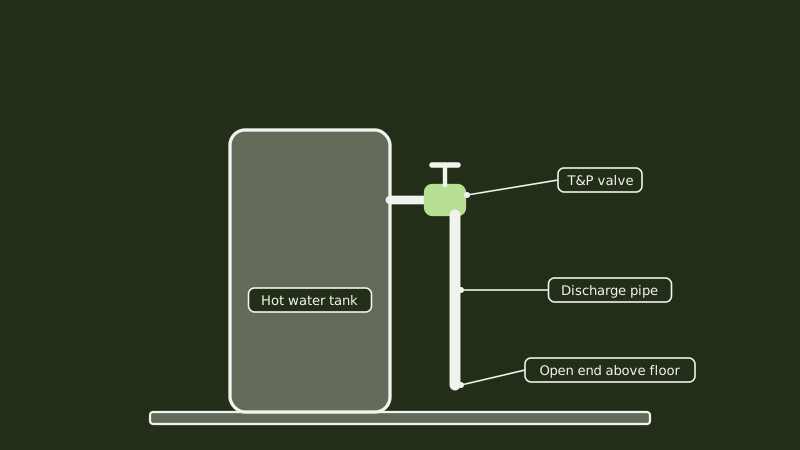
A temperature and pressure relief valve, usually called the T&P valve, is a spring-loaded safety device screwed into the side or top of a water heater. Should the tank overheat or the pressure build past safe limits, the valve pops open and vents water down a pipe, which keeps the tank from splitting. It is cheap to replace, and the repair is a small part of what we arrange under water heater repair in Santa Ana.
Why is the relief valve on my water heater dripping or leaking?
A dripping relief valve means one of three things: the valve is worn or dirty and no longer seals, the water pressure in your plumbing is too high, or thermal expansion is pushing the pressure up every time the heater fires. Scale on the seat often stops a valve from shutting all the way.
The way to tell them apart is to look at when it drips. A slow, steady weep with no pattern suggests a tired valve. Dripping that comes in bursts while the heater is heating suggests thermal expansion, which a small expansion tank can handle. Dripping that goes on all day points to high house pressure, and a pressure above 80 psi should be checked and, if needed, lowered with a regulator. The guide to changing a water pressure regulator covers that side.
Hardness plays a part in Santa Ana. The city's water quality FAQ puts it at about 250 parts per million, and scale grows on valve seats and in the tank. Do not respond to a dripping valve by capping the pipe. A valve that drips is doing its job, or failing at it, and plugging the outlet defeats the safety.
How do you test a T&P valve?
Run a test once a year, with a pail catching the discharge or a floor drain close by. Raise the small lever for a few seconds, around three to five, then let go. A healthy valve passes a strong flow of water and snaps shut with no drip. No flow, or a drip afterward, means it needs replacing.
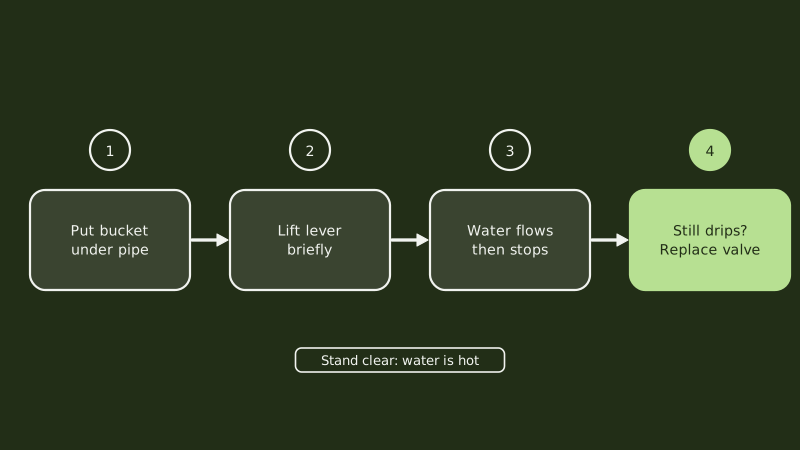
Take care. The water that comes out can be hot enough to scald, so stand to one side and keep children and animals clear. With a heater older than ten years and a valve nobody has ever lifted, a few plumbers would rather replace it than test it, because an aged valve can refuse to reseat after being opened. If you suspect that, have a plumber test it so that a replacement can be done on the spot.
Valve makers and plumbers publish similar steps. The information here is general, and the manual for your heater has the specific instructions for your model.
What should a new relief valve cost?
Published guides put the valve itself at about $15 to $40 and a plumber replacement at about $100 to $250 installed. If the discharge pipe is corroded or badly routed, add roughly $30 to $75. If thermal expansion is the cause, an expansion tank adds about $30 to $80 for the part, plus labor. Treat these as a guide, and the quote is the real price.
Small as the price is, much of it is the visit. Replacing the valve involves shutting off the water supply and the heater's fuel or power, draining part of the tank below the valve, unscrewing the old valve, threading in a new one with sealant, and a final test. If the heater itself is ageing, ask whether the same money should go toward a new one. Signs of age are listed under water heater replacement timing, and the bigger bill is on the replacement cost page.
What rules apply to the discharge pipe?
The relief valve's discharge pipe needs to match the valve outlet in size, typically three-quarter inch, run downhill without a trap or an upward section, and end near the floor or over a drain. It must be heat-rated pipe such as copper, and it must never be capped, plugged or reduced in size. No valve may sit between the relief valve and the end of the pipe.
These rules come from plumbing code practice and valve maker instructions, and local code can differ in detail. A pipe that ends inside a wall or a closed space is a hazard, because scalding water has nowhere safe to go. A pipe made of ordinary PVC can soften with hot water, so plumbers use materials rated for the temperature. If your discharge line is missing, too short or plugged, have it corrected when the valve is replaced.
When you buy a replacement, the valve's pressure and temperature ratings must suit the heater. Residential heaters commonly use a valve rated for 150 psi and 210 degrees Fahrenheit with a heat rating that matches the heater's input. Check the label on the tank or the manual, since a wrong rating is not a minor error.
Can you replace the valve yourself?
A handy owner can, when the valve is easy to reach and there is a shutoff, but there are limits. Kill the heater's fuel or electricity, then close the cold-water line, relieve pressure at a hot tap, and drain enough from the tank to bring the level under the valve. A seized old valve can twist the tank fitting, and a leak at the tank is not a repair job.
Hand it to a plumber if the valve is frozen in place, the tank fitting is corroded, the discharge pipe needs rework, the heater is gas and relighting the pilot is unfamiliar, or you are unsure of the right rating. Gas work needs care. Smell gas at any stage and everyone goes outside first. SoCalGas is 1-800-427-2200, and 911 covers any immediate danger.
Swapping the whole heater in Santa Ana needs a city permit, and state law has the new unit strapped for earthquakes. Swapping only the relief valve is a repair, but the local building department can confirm whether it needs anything extra.
When is a leaking relief valve a sign the heater is failing?
If a new valve still drips, or hot water pours from it constantly, something is wrong with the heater or the supply. A failed thermostat can overheat the water, and constant overheating makes the valve release. An old tank that rumbles or leaks elsewhere may be nearly spent, and a new valve would only postpone the real fix.
Look at the pattern after replacement. If the new valve is dry for weeks and then starts again, check house pressure and install an expansion tank if one is missing. The expansion tank has its own write-up under expansion tank replacement. If the valve is blowing hot water and the heater is old, call a plumber promptly and turn the heater off in the meantime.
Common questions
How often does a relief valve need replacing?
There is no single interval. Test it yearly, and replace it when it will not flow, will not reseat, drips or is visibly corroded. Many plumbers replace the valve when the heater is replaced, since the valve is cheap and a new one comes with a new heater. Hard water shortens a valve's life.
Can I plug a leaking relief valve to stop the drip?
No. The relief valve is the final safeguard against an overheated or over-pressured tank. A stopped-up discharge pipe turns a nuisance drip into a hazard. If the valve leaks, replace it and find the cause, whether that is worn parts, high pressure or thermal expansion.
Can a plumber replace the valve without draining the whole tank?
Usually yes. The level only has to fall below the valve opening. The plumber closes the cold supply, bleeds pressure at a hot tap, lets a few gallons out of the drain valve, and swaps the part. A full drain is reserved for other jobs.
Does a pressure relief valve replacement need a permit?
Replacing a whole water heater in Santa Ana needs a permit. Whether a repair as small as changing the valve does is a question for the City of Santa Ana Building and Safety staff, and we have not confirmed it. A plumber doing the job will know the local practice.
The quote page is where you ask for a look at your heater. Other plumbing topics are indexed on the Santa Ana Plumbing Co home page.
Sources
- Published relief valve replacement prices and test procedures from plumbing cost guides and valve makers, checked November 2026
- City of Santa Ana Permits Counter, project list (replace water heater: permit required)
- California Health and Safety Code section 19211, water heater strapping
- City of Santa Ana, water quality FAQ (hardness about 250 ppm)
Last updated