A failing electric water heater can push the power bill up, mostly by running when it should be idle or by working harder for the same hot water. That is not true of a gas heater, which uses gas, not electricity, apart from a tiny draw for controls on some models. If the bill is the worry, the first step is knowing which kind you own. Our tankless water heater installation page shows the efficient alternative to a tank.
Can a faulty water heater really raise my electric bill?
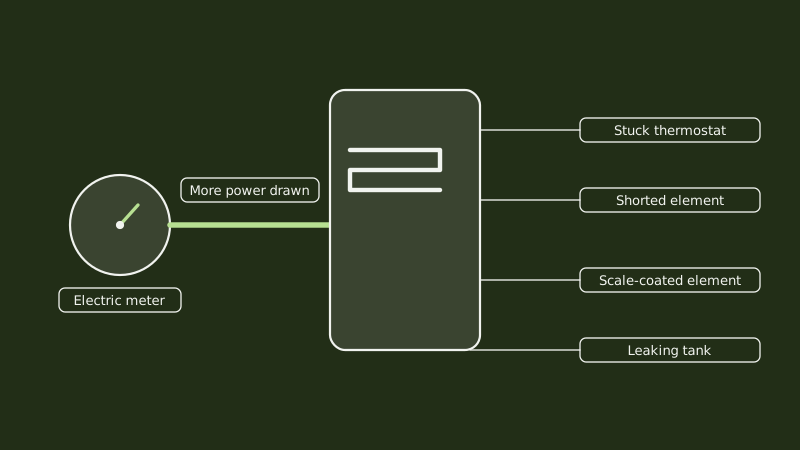
Yes, when it is an electric tank. The usual faults are a thermostat that never shuts the element off, an element that has shorted, a thick layer of scale that makes the heater run longer, and a leak that keeps feeding it fresh cold water. Each one adds kilowatt hours with no extra hot water for you.
Water heating is one of the biggest energy uses in a home. Energy-efficiency guidance commonly puts it near 18 percent of household energy, second only to heating and cooling. So when the heater misbehaves, the effect shows. A heater that works normally might cost somewhere around $400 to $600 a year to run, by that same guidance, so a fault that doubles its run time is easy to spot on a bill.
What breaks in a heater to make it use more power?
Four faults account for most cases of an electric heater using more power than it should: a thermostat that never lets the element rest, a shorted element, scale that blankets the heating surface, and a leak that forces constant reheating. Each one burns power without giving you any extra hot water. In more detail:
- A stuck thermostat. If the thermostat fails to shut off, the element keeps heating and the water gets scalding. A hot relief valve discharge or steam from taps is a warning. Turn the heater off and call for help.
- A shorted or grounded element. It can trip the breaker, or pull current without heating properly.
- Scale and sediment. Minerals coat the element and settle on the tank floor. Hard water deposits insulate the heating surface, so the element runs longer for the same temperature. Santa Ana water is hard, around 250 parts per million by the city's own measure, so tanks collect scale here.
- A leak. A dripping hot pipe, a weeping valve or a failing tank means the heater keeps reheating replacement water.
There is also a quiet one: heat loss. A tank set at 140 degrees Fahrenheit loses more heat to the room than one set at 120, and DOE-based guidance puts that standby waste at roughly $36 to $61 a year for a 140 setting. Savings of 3 to 5 percent per 10 degrees lowered are commonly quoted, though sources vary.
How can I check if the heater is behind the jump?
Compare the bill with last year's same month, then check for the signs: water that is hotter than usual, a heater that runs constantly, a hot tank room, wet floor, a rumbling tank, or a breaker that keeps tripping. If you have a smart meter or an app from your utility, look at the usage pattern for the hours when nobody is home.
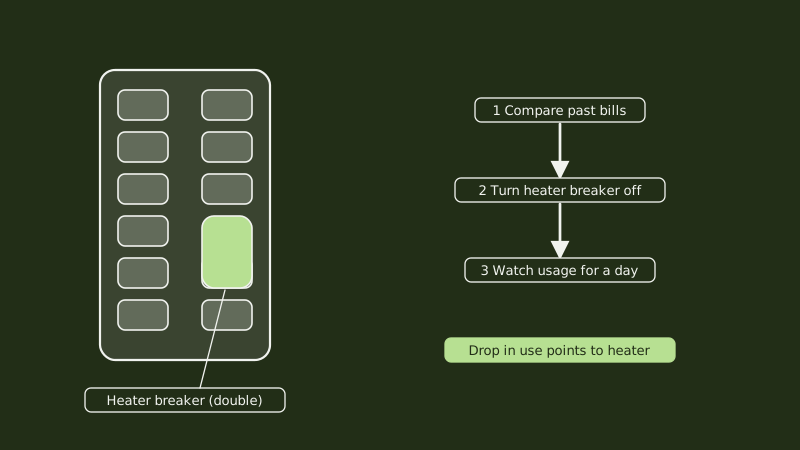
A simple test is to switch the heater's breaker off for a day or two and watch the usage data. If the daily draw drops sharply, the heater is a big part of it. Do this only if you can manage without hot water for that time, and switch it back on afterward. Never open the access panel or touch wiring while the power is on, as a water heater uses 240 volts. If you suspect a thermostat or element fault, the page on replacing a water heater element explains how a failed one is tested. For lukewarm or cold water, the whole-house no hot water page is the one to read.
Does a leaking water heater use more electricity?
It can. A leak lets cold water refill the tank continuously, so the heater reheats more water than your household uses. A tank that leaks from its shell is beyond repair, and the water can damage floors and walls. Turn off the cold supply and the power, then get it checked. A drip from a pipe connection is often a smaller fix than a leaking tank body.
Water around the base can come from the tank itself, a loose fitting, condensation or the relief valve. If the relief valve on the tank is dripping, leave it for a plumber, since that valve guards the tank against excess pressure. The page on relief valve replacement and the one on an expansion tank explain how pressure problems cause these drips.
Do gas water heaters affect the electric bill?
Hardly at all. A standard gas tank heats with a burner and needs little or no electricity. Some power-vent or electronic-ignition models draw a small amount. If you have gas and a high power bill, the water heater is rarely the reason, so look at air conditioning, a pool pump or other big loads.
With gas, safety leads. A gas smell means walking out and phoning SoCalGas from the street (1-800-427-2200), then 911 if things look dangerous. Gas piping and venting stay off the DIY list, because the work calls for a California contractor license. A replacement heater needs a permit in Santa Ana, which the Building and Safety division issues, and seismic strapping must be in place.
When does replacing the heater make more sense than repair?
Maybe. If the tank is old, leaking, noisy from scale or unreliable, replacing it can fix the bill and the hot water together. Many tank heaters have a service life in the range of ten to fifteen years, though water quality and care vary. A newer, better insulated unit or a tankless model uses less energy.
The signs of an aging unit are listed in water heater lifespan. To compare types, see tank vs tankless. Scale is a big reason elements and tanks fail early, so getting rid of hard water scale is a useful read. To have a local plumber check a heater, request a price. Browse everything else from the Santa Ana Plumbing Co home page.
Common questions
How much extra could a faulty heater add to the bill?
It depends on the fault and your rates, so we cannot give one number. A heater that never cycles off, or one fighting heavy scale, can use noticeably more power than a healthy one. Comparing this year's bills with last year's, in the same months, shows the size of the change.
What belongs in a heater repair estimate?
It should say whether both thermostats, the elements and the relief valve get tested, and report the tank condition. Get the figure on paper beside a replacement price for comparison. The contractor should also give you a license number that the state board lets you verify.
Does turning the heater down save money?
Yes, generally. Many guides suggest about 120 degrees Fahrenheit, which also lowers scalding risk and slows scale. Each 10-degree reduction is often quoted as saving 3 to 5 percent of water heating energy. Make sure the setting is not so low that it fails to meet household needs.
Does an adult have to be home?
Yes, to unlock the space where the heater sits, whether that is a garage, a closet or an attic, and to show the breaker. Power and water may go off for a short stretch while the plumber tests, so plan any laundry or cooking around it.
Is a very hot tap a safety issue?
Yes. Water hotter than the thermostat setting can scald, particularly children and older adults, and can mean a stuck thermostat. Turn the heater off at the breaker and arrange for it to be checked before use. Do not bypass or cap the relief valve.
Sources
Last updated