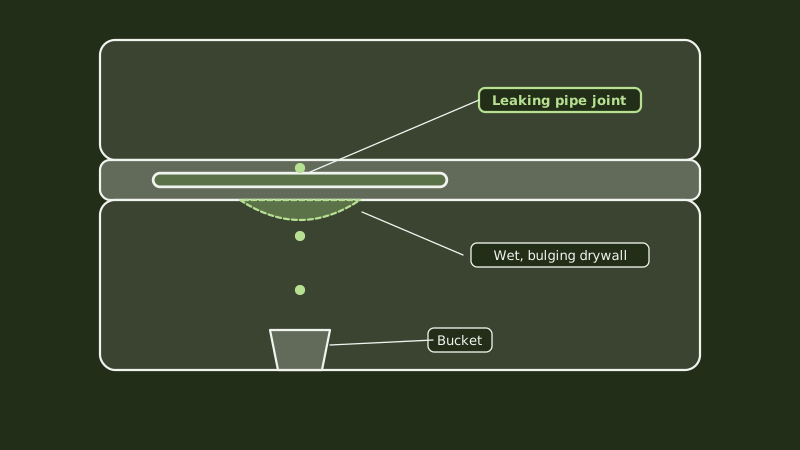
Start with electricity, then water, then the ceiling itself. If the leak is near a light, a fan or an outlet, flip that circuit off at the breaker panel before anything else. Then close the main water valve if you suspect a supply pipe, move belongings, and catch the drips. This page walks through those steps, what a bulging ceiling means, how fast a burst pipe can be fixed, and why drying within a day or two matters. A burst supply line is covered more fully under burst pipes, and the other jobs we arrange in Santa Ana are on our home page.
What are the first moves when a ceiling starts dripping?
Kill the power to that part of the house at the breaker, stop the water where possible, and contain what is falling. Water meeting electricity is the chief danger, so treat any leak near lights or outlets as live. After that, set a bucket beneath the drip, shift the furniture and photograph the damage before cleaning.

In this order:
- Breaker first, never the wall switch. Water close to a light, fan or outlet means that circuit goes off at the panel. Not sure which one? Shut the main. Never wade through standing water to get to the panel.
- Stop the supply. When the leak could be a supply pipe, or a tub or toilet overhead, close the main valve. A leak that began after rain more likely comes from the roof.
- Contain it. Buckets, towels, plastic sheeting draped over furniture.
- Move belongings out from under the wet area.
- Photograph the ceiling, the floor and the damaged items for insurance.
- Write down the start time and whether anyone upstairs had been using water.
Water dripping out of a light fitting is its own emergency. Read water leaking through a ceiling light. Even after the leak is fixed, have an electrician look at wet wiring before power is restored.
What if the ceiling is bulging or sagging with water?
A bulge holds water and can collapse. If it is small, away from lights and fans, and you can stand to one side, put a bucket beneath its lowest point and push a screwdriver through the center so it drains in a controlled way. If it is large, wide, cracked, near electrics or old plaster, stay out of the room and call.
Why drain it: a swollen drywall ceiling is carrying the weight of the water, and the collapse is sudden and messy when it comes. Making a small hole releases the pressure in a place you choose. After it drains, dry the area with towels, a wet vacuum and fans.
Do not puncture a ceiling:
- Near any light fixture, fan or electrical box until the circuit is off.
- Where the bulge is high, large or you cannot reach it safely.
- If the ceiling is lath and plaster pulling away, as in some older Santa Ana homes. These come down in heavy pieces.
Further reading on what happens afterward is in ceiling damage from a water leak.
How do I work out the source of the leak?
Usual sources are a supply pipe, a drain, a fixture above, an appliance or the roof. A leak that shows only when someone runs a shower, toilet or washer points at drains and fixtures. A steady drip that continues with every tap closed suggests a pressurized supply line. A leak that arrives with rain points at the roof.
How to narrow it down:
- Rain-only leaks. A roof or flashing problem. That is a roofer's job, not a plumber's.
- Leaks when upstairs fixtures run. A drain, a shower pan, a tub overflow or a toilet seal. In an apartment, tell the neighbor above and the landlord.
- Constant leaks. A supply line, a water heater or a fitting. Check whether the water meter dial moves with everything off.
- Leaks near an air handler or a duct. A condensate line, which is an HVAC trade problem.
- Bathroom above. The usual suspect in a two-story house.
A stain with nothing dripping is a different puzzle: see stains that appear without any drip. Another general clue: the most common household leaks, according to EPA, are worn toilet flappers, dripping faucets and leaking valves, but those usually waste water without staining a ceiling.
Could it be a burst pipe, and how long does the fix take?
A burst or split supply line pours water, often loudly, and keeps going until the main valve is closed. Fixing the break itself is often a matter of hours once a plumber has access to it, and the longer part is opening and then closing the wall or ceiling. Drying and rebuilding take longer, days or more.
Clues that a pipe has split above you: water appearing quickly rather than as a slow drip, the sound of running water with fixtures off, a sudden loss of pressure, and a water meter that is spinning. For more on recognizing one, read recognizing a burst pipe, and for urgent help see burst pipe call-outs.
What a repair usually involves:
- The plumber confirms the source and the main valve is closed.
- A section of ceiling or wall is opened to reach the pipe.
- The split section is cut out and swapped, or the fitting is redone.
- The line is pressure tested and the water is turned back on.
- Drying, repair and painting follow, often done by other trades.
If a flood has soaked a house, a water restoration company handles the drying. A plumber stops and fixes the leak. In an older Santa Ana home, galvanized or aging copper lines may fail repeatedly, and a plumber may raise replacement as an option. Typical bills are in burst pipe repair cost.
How quickly must things dry, and what about mold?
Get wet materials dry within a day or two. EPA guidance says that drying water-damaged areas and items within 24 to 48 hours prevents mold in most cases. After that, mold can start on wet drywall, insulation and carpet. Use fans, a dehumidifier and a wet vacuum. Remove wet insulation and soaked ceiling pieces.
A few practical points on ceilings:
- Small leak in the ceiling. If it dried fast, paint it with a stain-blocking primer once fully dry. If the stain returns, the source is not fixed.
- Mold on the ceiling after a leak. A small patch of mold can be cleaned, and a large or recurring area, or any area in a tenant's unit, should be reported and handled by a professional.
- Insulation above. Wet insulation holds moisture and should be removed.
- Paint after a leak. Wait until the material is dry through, since paint over a damp ceiling bubbles.
Tenants should tell the landlord in writing straight away and attach photos. A ceiling leak with mold in an apartment is a habitability problem, and the landlord is expected to fix the source.
Who pays for a ceiling leak, and what will the bill look like?
Insurance may cover sudden damage, such as a burst pipe, and often excludes slow leaks and wear. Costs vary widely with where the leak sits, so published prices are only a guide. Leak detection and repair are often priced separately from ceiling repair, and the written quote ought to spell out what it covers.
Read your policy, report the claim promptly and keep the plumber's invoice, since insurers ask what caused the damage. Insurance and burst pipes covers the usual questions, and plumber prices for fixing a leak gives ranges. A local plumber is arranged through us, with the price on paper first. Jobs reaching $1,000 need a California contractor license, so ask for the number.
Common questions
How many hours does a burst pipe repair take?
Mending the pipe is often a matter of hours once the plumber can reach it, depending on its location and the pipe material. Opening and patching the ceiling, plus drying, adds days, and big floods or hidden leaks take longer. Take these as typical timings only.
Which household leak happens most often?
EPA lists worn toilet flappers, dripping faucets and leaking valves as the common household leaks. They waste water quietly. A leak that stains a ceiling more often traces to a supply pipe, a drain line, a shower pan or the roof, and a plumber can trace which with meter checks and moisture readings.
Can I leave a small ceiling leak until later?
It is risky. A small leak can soak insulation and drywall, feed mold within a day or two, and weaken the ceiling. At minimum, stop the supply if you can, dry the area and have a plumber find the source. Treat any leak near lights as urgent.
What if water leaks into my basement or garage ceiling?
True basements are uncommon in Santa Ana, but a garage or lower-floor ceiling can leak from plumbing in the floor above. Follow the same steps: power off near wet wiring, water off if you can, contain it. Find which fixture above is involved by noting when it drips.
What if I rent and the leak comes from the apartment above?
Send the landlord or manager a dated message with photos, and let the neighbor above know. Building plumbing is generally the landlord's to repair. Ask who will fix and dry the ceiling. The same notice-and-records approach appears in apartment hot water rules.
Sources
- EPA, A Brief Guide to Mold, Moisture and Your Home
- EPA WaterSense, Fix a Leak Week
- California Contractors State License Board
- Published 2026 plumbing guides on ceiling leak response, checked November 2026
Last updated