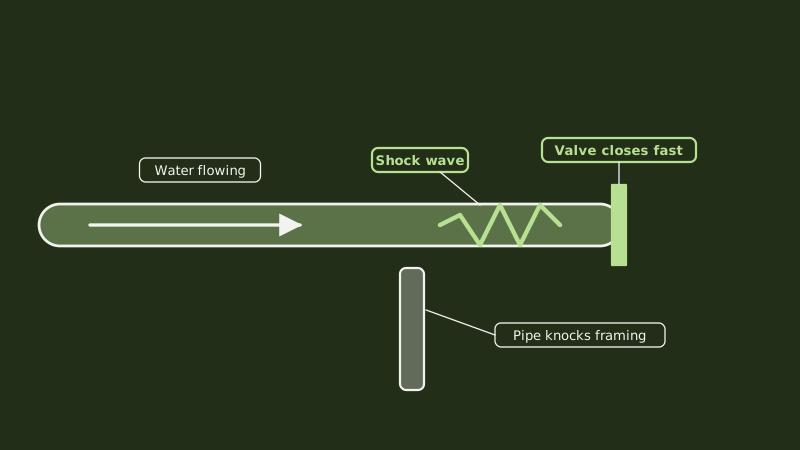
Water hammer is the thump, bang or shudder you hear when water flowing through a pipe is stopped suddenly, usually by a washing machine or dishwasher valve snapping shut. The moving water slams into the closed valve and sends a pressure wave back through the pipes. It is common, usually cheap to fix, and worth fixing. Other plumbing jobs are listed on the home page.
What exactly is that banging in my walls when a faucet or machine shuts off?
It is water hammer: the flowing water has momentum, and when a valve closes fast the water stops abruptly and the pressure spikes. The sharp knock travels along the pipes to wherever they are loose. The usual triggers are quick-closing valves on washing machines, dishwashers and ice makers, and single-lever faucets shut hard.
Plumbers call the physics hydraulic shock. The noise is the symptom, and the cause can be one of four things: pressure that is too high, pipes that are not secured so they slap against framing, air chambers that have filled with water, or a quick-closing valve with no arrestor nearby. Occasionally the sound is something else entirely, such as pipes ticking as they expand when hot water runs, which is thermal expansion rather than hammer, and which a pipe strap or sleeve often cures.
Which of the four causes is mine?
Start with pressure, since it amplifies everything else. A pressure gauge screws onto a hose bib or washing machine connection and takes seconds to read. Steady readings above about 80 psi are generally treated as too high, and sources suggest 55 to 65 psi as a comfortable target. Then note which fixture triggers the bang.
If the noise happens at a particular appliance, the valve there is the culprit. If it happens at every tap and the pressure reads high, suspect the regulator at the main supply entry. Where you can see exposed pipes in a garage, crawlspace or attic, look for ones that move when the hammer happens. In an older Santa Ana home a long run may hang from just a few old hangers, and a loose pipe can keep banging after the real cause is fixed. For more on regulators, see where a water pressure regulator is located.
What stops water hammer, from cheapest to costliest?
Work in order. Secure loose pipes with straps first, since that costs almost nothing. Check the pressure and replace or adjust a faulty regulator if it is above 80 psi. Recharge old air chambers by draining the system. Fit water hammer arrestors near the offending valve if the noise persists. Each step rules out one cause.
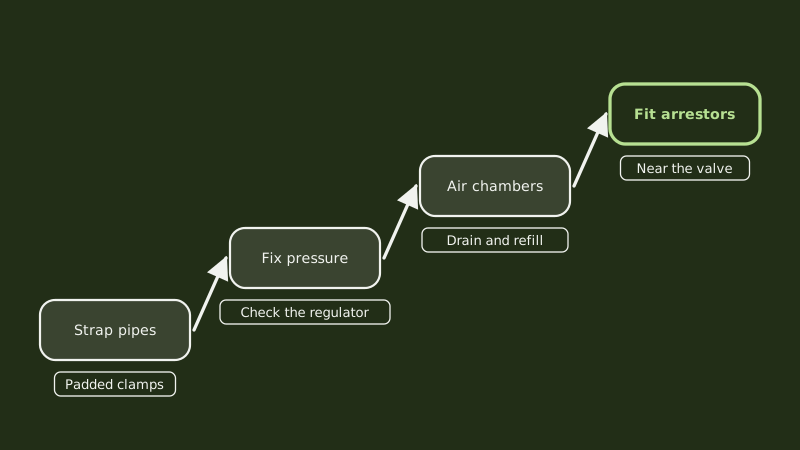
- Strap the pipes. Add padded clamps where lines touch framing.
- Fix pressure. A failing regulator can let pressure creep up. The pages on changing a regulator and regulator replacement cost cover that route.
- Recharge air chambers. An air chamber is a capped vertical pipe stub behind the fixture. Over time it fills with water and stops cushioning. To recharge: close the main, open every faucet to drain the system, then close the faucets and reopen the main slowly. If the knocking returns within days, go to the next step.
- Install arrestors. A sealed device with a piston or diaphragm absorbs the shock. Mount it close to the fast-closing valve, for example on the washing machine supply.
Does water hammer harm the plumbing over time?
Yes, over time. Repeated pressure spikes can loosen fittings, strain soldered joints, chew valve seats and cut short the life of appliance valves. A single bang does not usually burst a pipe, but a persistent one is a sign that something is under stress. Fixing it early costs less than repairing a leak later.
Older homes carry more risk, because galvanized and old copper joints are less forgiving than new PEX. If hammer started after a plumbing change, the new valve or a work error may be the cause, and a plumber who made the change should return. A water heater can also play a part: a closed system with no working expansion tank sees pressure climb when the tank heats, and the water heater expansion tank guide explains how.
Where does a DIY fix end and a plumber begin?
Call when the pressure reads above 80 psi, when the noise comes from inside walls you cannot reach, when strapping and recharging did not help, or when a gas appliance, water heater or regulator is involved. Pressure regulator replacement and arrestors on concealed lines are plumber jobs. A plumber typically measures static pressure first.
A professional arrestor install costs more than doing it yourself, and no published figure fits every house. Read any price you see online as a rough guide. Access and the number of protected fixtures drive the real price, and work that opens a wall deserves a written quote. If weak flow comes along with the hammer, see why pressure drops in a house, since a failing regulator can cause both.
Could the noise be a gas line or HVAC problem?
Water hammer is a plumbing sound, not a gas sound. Gas lines do not hammer. Hissing, whistling or a rotten-egg smell near a gas appliance means a leak instead: get out, and from the street dial SoCalGas on 1-800-427-2200, and keep 911 for danger. A noisy furnace or air handler is an HVAC matter, unrelated to the water pipes.
If you are unsure what you are hearing, note when it happens. Water hammer follows a valve closing, right when water stops. Ticking or creaking that comes as pipes warm or cool is thermal movement. A loud thud that comes at random with no tap in use is worth a plumber's visit, since it can point to a valve elsewhere in the building or a pressure problem at the supply.
Common questions
Is water hammer dangerous?
Usually not in the sense of an immediate hazard, but it is wear on your plumbing. The risk is a loosened fitting or a worn valve leaking over time. If the bang is violent, or a joint weeps afterward, close the main and bring in a plumber.
Will a water hammer arrestor cure it?
Often, if the cause is a quick-closing valve. An arrestor absorbs the pressure wave right at the source. It will not fix high pressure or loose pipes, so check those first. One arrestor near the washing machine is a common remedy, and plumbers sometimes add one to each end of a run.
Why did water hammer start suddenly?
A sudden change usually points to something that changed: a new appliance, a regulator that failed and let pressure climb, plumbing work nearby, or water supply work in the street. Check your pressure first. If it reads high, the regulator is the likely cause and a plumber can test it.
What will a water hammer repair set me back?
A do-it-yourself fix costs the price of the parts, while a plumber fitting arrestors adds labor and a visit charge. A regulator swap is billed separately. Access and fixture count move the price, and no single number fits every house, so request the figure on paper once the plumber has measured your pressure.
Sources
Last updated